
Quick Answer: What Should You Eat?
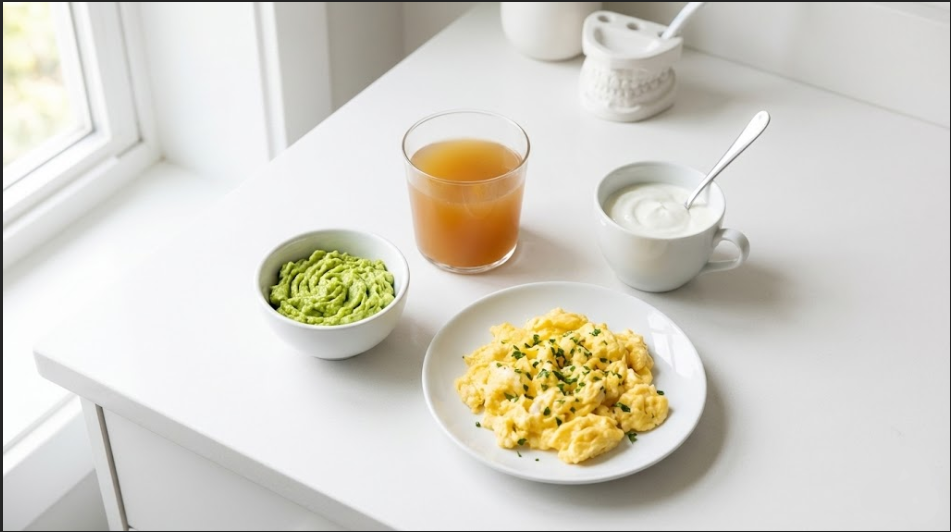
To ensure successful osseointegration and minimize discomfort, patients should prioritize Soft Foods to Eat After Dental Implant Surgery that are nutrient-dense and require zero chewing. The best options include unflavored Greek yogurt, lukewarm bone broth, soft-scrambled eggs, mashed sweet potatoes, and avocados. For the first 24 to 48 hours, stick to cool liquids and strictly avoid straws to prevent negative pressure, which can cause dry socket. Proper nutrition accelerates soft tissue healing and protects the stability of the titanium post.
Table of Contents
You have just completed the surgical phase of your dental restoration. The procedure happened in the clinical chair; however, the long-term success of your new smile is largely determined in your kitchen. Choosing the right Soft Foods to Eat After Dental Implant Surgery is not merely about comfort; it is a biological necessity. The food you consume acts as the raw material for bone regeneration and tissue repair.
As a specialist in oral rehabilitation, I often tell patients that their diet is as important as the prescription medications I provide. If you stress the surgical site with hard textures or fail to provide the necessary amino acids and minerals, you risk implant mobility and failure. This guide moves beyond generic advice to provide a scientifically grounded nutritional protocol. We will examine the biology of healing, a specific timeline for texture reintroduction, and the specific micronutrients needed to ensure your titanium post fuses permanently with your jawbone.
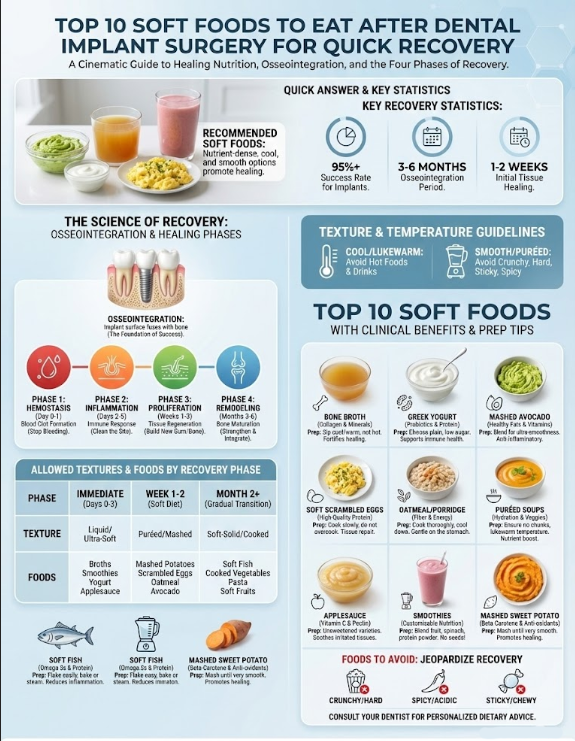
Key Recovery Statistics
- 95-98%: The typical success rate of dental implants when post-op protocols are followed strictly.
- 3-6 Months: The average time required for full osseointegration (bone fusion).
- 1.2g/kg: The recommended daily protein intake per kilogram of body weight to support wound healing.
- 72 Hours: The critical window where the blood clot is most vulnerable to dislodgement.
- 10-14 Days: The typical duration before returning to a standard “fork-tender” diet.
The Biology of Osseointegration: Why Diet Matters
To understand why we prescribe specific Soft Foods to Eat After Dental Implant Surgery, we must first understand the biological objective: osseointegration. This term refers to the direct structural and functional connection between living bone and the surface of a load-bearing artificial implant. It is not just healing; it is fusion.
The process is cellularly complex. It involves the recruitment of osteoblasts, the cells responsible for bone formation. These cells require immense energy and specific raw materials to function. If your diet lacks these materials, the osteoblasts cannot build the matrix required to lock the implant in place.
The Four Phases of Healing
Recovery is not a single event but a sequence of biological stages. Your diet must evolve to support each phase.
1. Hemostasis (Day 0–1)
Immediately after the implant is placed, your body works to stop bleeding by forming a fibrin clot. This clot is the scaffold for all future healing. During this time, mechanical disturbance from chewing or suction from a straw can dislodge this clot. Losing this clot leads to alveolar osteitis, commonly known as dry socket.
2. Inflammation (Days 1–3)
The immune system rushes to the site to clean up debris and bacteria. You will experience swelling (edema) and warmth. Anti-inflammatory foods are vital here. We want to manage inflammation so it does its job without causing excessive pain or tissue damage.
3. Proliferation (Weeks 1–3)
Your body begins laying down new blood vessels (angiogenesis) and provisional connective tissue. This is where protein intake becomes non-negotiable. Without adequate amino acids, your body cannot synthesize the collagen required to close the soft tissue over the bone.
4. Remodeling (Weeks 4+)
The immature bone is slowly replaced by mature, load-bearing bone that locks into the threads of the titanium post. This process demands calcium, Vitamin D, and phosphorus. This phase can last for several months.
According to general guidelines from the American Association of Oral and Maxillofacial Surgeons (AAOMS), the mechanical stress placed on an implant during these early phases must be kept to an absolute minimum. Chewing hard foods causes “micro-motion” of the implant. If the implant moves more than 150 micrometers during the healing phase, the body may encapsulate it in scar tissue rather than bone, resulting in failure.
The Critical Protocol: The “Texture and Temperature” Timeline
Navigating your post-operative diet requires a strict adherence to texture and temperature rules. We categorize recovery into three distinct dietary phases.
Phase 1: The “Cool Liquid” Stage (0–24 Hours)
For the first day, your mouth is numb, and the surgical site is an open wound. Heat promotes bleeding by dilating blood vessels (vasodilation). Therefore, you must stick to cold or room-temperature liquids. Cold helps constrict blood vessels (vasoconstriction), which naturally reduces swelling.
The “No Straw” Rule: This cannot be overstated. Using a straw creates a vacuum in your mouth. This negative pressure can physically pull the blood clot out of the socket. Drink directly from the cup or use a spoon.
Phase 2: The “Mushy” Stage (Days 2–7)
Once the bleeding stops, you can introduce foods with a pudding-like consistency. These are foods that require absolutely no mastication (chewing). You should be able to swallow them by manipulating the food with your tongue against the roof of your mouth.
Phase 3: The “Soft Solid” Stage (Days 7–14)
As the gum tissue closes, you can transition to fork-tender foods. If you can cut it easily with the side of a fork, it is safe. This tests the stability of the gingival tissue without stressing the underlying bone.
Comparison Table: Post-Op Dietary Timeline
| Recovery Phase | Timeframe | Allowed Textures | Temperature Rule | Clinical Goal |
|---|---|---|---|---|
| Hemostasis | 0–24 Hours | Liquids only (Smoothies, Broth) | Cold / Room Temp | Stabilize blood clot; reduce swelling. |
| Inflammation | Days 2–3 | Pureed / Mushy (Pudding consistency) | Lukewarm / Cool | Prevent thermal irritation; maintain calorie intake. |
| Proliferation | Days 4–10 | Soft Solids (Fork-tender) | Warm (Not hot) | Support collagen synthesis; avoid mechanical trauma. |
| Maturation | Days 10+ | Normal Diet (Avoid hard/crunchy) | Normal | Gradual return to function; verify implant stability. |
Top 10 Soft Foods for Quick Recovery (Deep Dive)
Identifying the right Soft Foods to Eat After Dental Implant Surgery is about maximizing nutrient density per bite. Since you will likely eat less volume due to discomfort, every calorie must contribute to healing.
1. Greek Yogurt (Unsweetened/Plain)
Clinical Benefit: Greek yogurt is a staple in dental implant recovery. It contains nearly double the protein of regular yogurt. The primary proteins, casein and whey, provide the amino acids necessary for tissue repair. Additionally, the calcium content supports the mineralization of the jawbone around the implant.
Probiotic Benefit: Many patients are prescribed prophylactic antibiotics (like Amoxicillin or Clindamycin) to prevent infection. These drugs can disrupt gut flora. The live cultures in Greek yogurt help restore this balance. Choose a smooth variety without fruit chunks to avoid irritation.
Preparation Tip: Avoid high-sugar flavored yogurts, as sugar promotes inflammation. Add a drop of honey or pureed fruit if you need sweetness.
2. Bone Broth (Homemade or High Quality)
Clinical Benefit: Bone broth is rich in glycine, proline, and arginine. These are amino acids derived from collagen that are anti-inflammatory and essential for connective tissue repair. It is essentially liquid building material for your gums.
Preparation Tip: Ensure the broth is lukewarm, not scalding hot. High heat can dissolve the blood clot or cause pain in the sensitized surgical site. Strain it thoroughly to remove any small bone fragments or spices.
Why It Works: It provides hydration and electrolytes, which are often depleted after surgery due to fasting or difficulty drinking.
3. Scrambled Eggs (Soft Curd)
Clinical Benefit: Eggs are considered a “complete protein,” meaning they contain all nine essential amino acids. They are also a rare food source of Vitamin D, which is a critical regulator of calcium absorption. Without sufficient Vitamin D, the calcium you eat cannot effectively mineralize the new bone.
Cooking Method: Cook them “low and slow” with a bit of butter or olive oil. Remove them from the heat while they are still slightly runny (soft curd). Overcooked eggs become rubbery and require chewing, which we want to avoid.
Nutrient Boost: Whisk in a tablespoon of milk or cream before cooking to make them fluffier and add calcium.
4. Mashed Sweet Potatoes
Clinical Benefit: While white potatoes are acceptable, sweet potatoes are superior for recovery. They are packed with beta-carotene (Vitamin A), which is vital for the maintenance of mucosal (gum) tissue. They also contain Vitamin C, a cofactor in collagen synthesis.
Energy Source: Recovery burns energy. Sweet potatoes provide complex carbohydrates that offer sustained energy without the sharp blood sugar spikes associated with refined sugars. This is particularly important for diabetic patients whose healing may be compromised.
Serving Suggestion: Mash them with coconut oil or butter until completely smooth. Ensure there are no fibrous strings.
5. Avocados
Clinical Benefit: Avocados are rich in monounsaturated fats. These healthy fats help modulate the body’s inflammatory response. Excessive inflammation causes pain and delays healing; controlled inflammation signals repair. Avocados help strike that balance.
Ease of Eating: The texture of a ripe avocado is ideal. It requires zero mastication and can be eaten with a spoon or blended into smoothies to increase calorie density.
Vitamin E Content: Avocados are high in Vitamin E, an antioxidant that protects cell membranes from oxidative damage during the healing process.
6. Wild-Caught Fish (Cod, Tilapia, Salmon)
Note: Introduce only after Day 3.
Clinical Benefit: Fish, particularly salmon, is loaded with Omega-3 fatty acids (EPA and DHA). These compounds are potent anti-inflammatories. Research suggests that high Omega-3 intake can improve bone quality.
Texture: Unlike steak or chicken, which are fibrous and require grinding, flaky white fish falls apart with gentle tongue pressure. This poses little risk to the abutment or the healing cap.
Precaution: Ensure the fish is baked or poached, not fried. Fried coatings can be crunchy and sharp.
7. Silken Tofu
Clinical Benefit: For patients following a plant-based diet, silken tofu is an excellent alternative to eggs or yogurt. It provides a complete protein profile necessary for soft tissue healing.
Versatility: Silken tofu has a neutral flavor and a custard-like texture. It can be blended into soups or fruit smoothies to boost protein content significantly without altering the taste. This is a great way to “hide” protein in your diet if your appetite is low.
Mineral Content: Tofu is often set with calcium sulfate, making it a surprisingly good source of bone-building calcium.
8. Applesauce (Unsweetened)
Clinical Benefit: Pain medications, especially opioids like hydrocodone, often cause constipation. Applesauce provides dietary fiber to help maintain digestive regularity. It is also a gentle way to get fruit intake without the acidity of citrus.
Texture: Ensure you choose a smooth variety. Avoid chunky applesauce or eating whole apples, as the skin can get trapped between teeth or near the sutures.
Vitamin C: Many commercial brands are fortified with Vitamin C, which aids in gum repair.
9. Hummus (Room Temperature)
Clinical Benefit: Chickpeas, the main ingredient in hummus, are a good source of zinc. Zinc plays a major role in DNA synthesis and cell division, making it essential for rapid wound healing.
Warning: The hummus must be completely smooth. Avoid varieties topped with whole pine nuts, roasted red peppers, or excessive lemon juice, as the acidity can sting the incision site.
Usage: Eat it plain with a spoon or mix it into mashed potatoes for a flavor boost. Do not use chips or raw vegetables for dipping.
10. Cottage Cheese
Clinical Benefit: Cottage cheese is high in casein protein. Unlike whey, which digests quickly, casein digests slowly, releasing amino acids into the bloodstream over several hours. Eating this before bed can support tissue repair while you sleep.
Modification: If the curds are large or firm, pulse the cottage cheese in a blender until it reaches a whipped consistency. This eliminates the need to manipulate the curds in your mouth.
Sodium Note: Cottage cheese helps replace sodium lost through sweat or bleeding, aiding in electrolyte balance.
Pro Tip: The “Blender” Rule
If you are craving a specific meal that isn’t on this list, ask yourself: “Can I swallow this without chewing?” If the answer is no, put it in a blender with a little broth or milk. While blended chicken soup may not look appetizing, it delivers the nutrients your body needs to secure the titanium post.
Foods to Strictly Avoid: The “Red Flag” List
Knowing what not to eat is just as vital as knowing the best Soft Foods to Eat After Dental Implant Surgery. Certain textures can cause mechanical failure of the implant.
Crunchy and Hard Foods
Nuts, chips, popcorn, and pretzels are dangerous. They require high bite force. Chewing these can cause micro-movement of the implant, disrupting the osseointegration process. Even a small piece of popcorn hull can get wedged between the gum and the implant, causing massive infection.
Small Seeds and Grains
Poppy seeds, sesame seeds, and the small seeds on strawberries or raspberries are hazardous. These tiny particles can easily get trapped in the periodontal pocket or under the suture line. Because you cannot brush vigorously, these trapped seeds cause irritation and infection.
Spicy and Acidic Foods
Capsaicin (the heat in peppers) causes vasodilation and can increase pain hypersensitivity. Avoid hot sauce, curry, and chili powder for at least a week. Similarly, tomatoes, oranges, and lemons can erode the organizing fibrin clot and sting the wound. Avoid tomato sauce and orange juice initially.
Sticky and Chewy Foods
Gummies, caramel, and taffy are strictly prohibited. They can pull at the sutures or the healing cap (the screw cover on top of the implant), potentially loosening them. The suction required to remove sticky food from the roof of your mouth is also risky.
Alcohol and Caffeine
Alcohol thins the blood, which delays clotting and increases the risk of prolonged bleeding. It also dehydrates the body and interacts dangerously with pain medications. Caffeine can also increase blood pressure, which may lead to throbbing at the surgical site. Avoid both for at least 72 hours.
Optimization Strategies for Healing
Diet is the foundation, but how you manage your oral environment enhances the effectiveness of your nutrition.
Hydration and Edema
Water is essential for lymphatic drainage. After surgery, you will have facial edema (swelling). Proper hydration helps the lymphatic system flush out metabolic waste and reduce puffiness. Aim for at least 8 glasses of water daily. Dehydration can lead to a dry mouth, which promotes bacterial growth.
Supplements: The Safety Net
If you struggle to eat enough, you may need to supplement. Vitamin C (500mg-1000mg) and Zinc (15-30mg) are the most common recommendations to boost soft tissue healing. However, consult your surgeon before adding supplements, as some can interact with blood thinners or other medications.
Oral Hygiene During Eating
Food debris is a breeding ground for bacteria. However, you cannot brush the surgical site directly for the first week. Instead, perform a gentle saltwater rinse after every meal. Mix 1/2 teaspoon of salt in a cup of warm water. Gently roll your head to move the liquid around your mouth, then let it drool out into the sink. Do not spit forcefully.
Data from the Journal of Oral Implantology indicates a strong correlation between malnutrition and implant failure rates. Patients with low serum albumin (a marker of protein status) have a higher risk of complications.
Comparison Table: Nutrient Sources for Implant Success
| Nutrient | Primary Function in Recovery | Best Soft Food Source |
|---|---|---|
| Protein | Tissue repair; cellular regeneration | Greek Yogurt, Eggs, Tofu |
| Calcium | Mineralization of new bone around implant | Cottage Cheese, Fortified Milk |
| Vitamin C | Collagen synthesis; gum health | Mashed Sweet Potato, Blended Fruit |
| Vitamin D3 | Calcium absorption regulator | Salmon, Egg Yolks |
| Zinc | DNA synthesis; wound healing acceleration | Hummus, Pureed Beef/Lamb |
| Omega-3 | Reducing inflammation | Salmon, Avocado |
Common Complications Linked to Poor Diet
Failing to adhere to the recommended post-operative diet can lead to severe complications that jeopardize your investment.
Delayed Healing
Protein deficiency slows down the proliferation phase. If your body lacks amino acids, the incision line may take longer to close. This leaves the bone exposed to bacteria for a longer period, increasing the risk of infection.
Infection (Peri-implantitis)
Peri-implantitis is an inflammatory condition affecting the soft and hard tissues around the implant. High sugar intake feeds the bacteria responsible for this infection. While ice cream is soft, high-sugar varieties should be avoided to keep bacterial counts low in the oral cavity.
Dry Socket
We must reiterate the danger of suction. Using a straw to drink your smoothie is the leading cause of dry socket in the first 72 hours. This condition exposes the underlying bone and nerves, causing excruciating pain and delaying the integration of the titanium post.
Implant Mobility
This is the worst-case scenario. If you chew hard foods too early, the implant moves. Connective tissue forms between the bone and the implant instead of bone-to-implant contact. This “fibrous encapsulation” means the implant has failed and must be removed surgically.
Sample 7-Day Meal Plan for Recovery
To take the guesswork out of your recovery, here is a structured plan designed to provide optimal nutrition without compromising the surgical site.
Day 1-2 (Liquid/Cool)
- Breakfast: High-protein fruit smoothie (no seeds, no straw).
- Lunch: Cold cucumber and avocado soup (blended smooth).
- Dinner: Lukewarm bone broth with dissolved gelatin for extra protein.
- Snack: Plain Greek yogurt with a drizzle of honey.
Day 3-4 (Mushy/Lukewarm)
- Breakfast: Soft scrambled eggs with cheese.
- Lunch: Mashed sweet potatoes with butter and protein powder mixed in.
- Dinner: Pureed lentil soup (lukewarm).
- Snack: Smooth applesauce or chocolate pudding.
Day 5-7 (Soft Solid/Warm)
- Breakfast: Oatmeal (instant, not steel-cut) with mashed banana.
- Lunch: Egg salad (finely chopped) on soft bread (remove crusts).
- Dinner: Baked tilapia (flaked) with mashed cauliflower.
- Snack: Cottage cheese or hummus (spoon-fed).
Summary & Key Takeaways
Recovering from oral surgery is a temporary inconvenience for a permanent gain. By strictly following a diet of Soft Foods to Eat After Dental Implant Surgery, you are investing in the longevity of your restoration. Remember the three pillars of recovery nutrition:
- High Protein: To build the collagen matrix.
- Soft Texture: To prevent micro-motion of the implant.
- Appropriate Temperature: Cool initially to stop swelling, then warm to soothe.
Patience in the first 72 hours pays off in the long term. Treating your diet as part of your medical prescription ensures that your dental implant recovery is smooth, and your new smile lasts a lifetime. Do not rush the process; let biology take its course fueled by the right nutrition.
Frequently Asked Questions
Why is using a straw prohibited after dental implant surgery?
Using a straw creates negative pressure in the oral cavity, which can physically dislodge the fibrin clot from the surgical site. This leads to alveolar osteitis, or ‘dry socket,’ which is extremely painful and significantly delays the healing of the soft tissue and the stability of the titanium post.
How long must I follow a soft food diet after getting dental implants?
The critical window for dietary restriction is typically the first 10 to 14 days. This allows the surgical site to achieve primary closure and protects the implant from micro-motion. If the implant moves more than 150 micrometers during the early stages of osseointegration, the body may form scar tissue instead of bone, leading to implant failure.
What are the most effective soft protein sources for tissue repair?
Greek yogurt, soft-scrambled eggs, and silken tofu are superior choices. Greek yogurt provides high concentrations of casein and whey proteins, while eggs offer a complete amino acid profile and Vitamin D. These nutrients are essential for the proliferation phase where collagen synthesis occurs to close the gum tissue.
Why should I avoid hot liquids immediately following the procedure?
For the first 24 hours, you must stick to cool or room-temperature liquids. Heat causes vasodilation, which widens blood vessels and can promote post-operative bleeding or increase facial edema (swelling). Cold liquids facilitate vasoconstriction, which helps stabilize the blood clot and reduce inflammation.
Are there specific fruits I should avoid even if they are served soft?
Yes, you must avoid fruits with small seeds, such as strawberries, raspberries, or kiwis. These tiny particles can easily become lodged in the periodontal pocket or under the suture line, leading to localized infection and irritation. Stick to smooth, unsweetened applesauce or pureed bananas instead.
Can I consume alcohol or caffeine during the dental implant recovery period?
It is medically advised to avoid alcohol for at least 72 hours as it thins the blood and increases the risk of prolonged bleeding. Caffeine should also be limited as it can elevate blood pressure and cause throbbing at the surgical site. Both substances can also cause dehydration, which slows the lymphatic drainage needed to reduce swelling.
What role does Vitamin D play in dental implant success?
Vitamin D is a critical regulator of calcium absorption. Without sufficient levels, the body cannot effectively mineralize the new bone matrix that must lock into the threads of the titanium post. Including Vitamin D-rich soft foods like salmon and egg yolks supports the long-term process of osseointegration.
Is it safe to eat spicy or acidic foods after oral surgery?
No, capsaicin in spicy foods and high acidity in citrus or tomatoes can irritate the sensitive surgical site and cause significant stinging. Furthermore, spicy foods can cause vasodilation, which may exacerbate inflammation and pain during the first week of recovery. We recommend a neutral-pH diet initially.
How does hydration affect the healing of dental implants?
Adequate hydration is essential for the lymphatic system to flush out metabolic waste and reduce facial edema. It also prevents xerostomia (dry mouth), which can lead to increased bacterial growth and a higher risk of peri-implantitis, an inflammatory condition that can cause the bone around the implant to deteriorate.
What should I do if food particles get trapped near my sutures?
Do not attempt to brush the surgical site directly or use a toothpick, as this can cause mechanical trauma. Instead, perform a gentle saltwater rinse (1/2 teaspoon salt in warm water) after every meal. Let the liquid roll over the area and drool it out; do not spit forcefully, as this creates risky negative pressure.
Why is ‘micro-motion’ a concern when choosing what to eat?
Micro-motion refers to tiny movements of the implant within the jawbone. If you chew hard or crunchy foods, the mechanical stress can cause the implant to move. If movement exceeds a microscopic threshold, the body will undergo ‘fibrous encapsulation’—forming a soft tissue layer instead of bone—resulting in a mobile, failed implant.
Can I eat ‘fork-tender’ meats during the first few days of recovery?
We generally recommend waiting until Day 7 to 10 to introduce fork-tender meats like flaked fish. During the first 72 hours, the focus should be on ‘mushy’ textures that require zero mastication (chewing). This ensures the fibrin clot remains undisturbed and the initial stages of bone regeneration can begin without interference.
Disclaimer
This article is for informational purposes only and does not constitute professional medical or dental advice. Recovery protocols can vary significantly based on individual surgical cases. Always consult your oral surgeon or qualified healthcare provider regarding your specific post-operative diet and care instructions before making changes to your recovery plan.
References
- American Association of Oral and Maxillofacial Surgeons (AAOMS) – aaoms.org – Provides clinical guidelines for post-operative care and dental implant stability protocols.
- Journal of Oral Implantology – joionline.org – Research studies regarding the correlation between nutritional status (serum albumin) and implant failure rates.
- American Dental Association (ADA) – ada.org – Official recommendations for patient diet and oral hygiene following invasive dental restorations.
- National Institutes of Health (NIH) – nih.gov – Data on the role of Zinc, Vitamin D, and Protein in bone mineralization and soft tissue wound healing.
- Mayo Clinic – mayoclinic.org – General surgical recovery guidelines and the biological phases of inflammation and tissue proliferation.
- International Congress of Oral Implantologists (ICOI) – icoi.org – Expert insights on the mechanical risks of micro-motion during the osseointegration phase.