
The human body is an interconnected machine where no single part operates in isolation. Yet for decades many Americans have treated their mouths as separate entities from the rest of their physiology. We often view a dental wellness visit as a cosmetic errand or a necessary chore to polish our smiles.
Table of Contents
This perspective is dangerously incomplete. The reality is that regular dental check-ups are sophisticated medical screenings capable of detecting early signs of life-threatening conditions. From the microscopic bacteria entering your bloodstream to the structural integrity of your jawbone the importance of regular dental check-ups cannot be overstated.
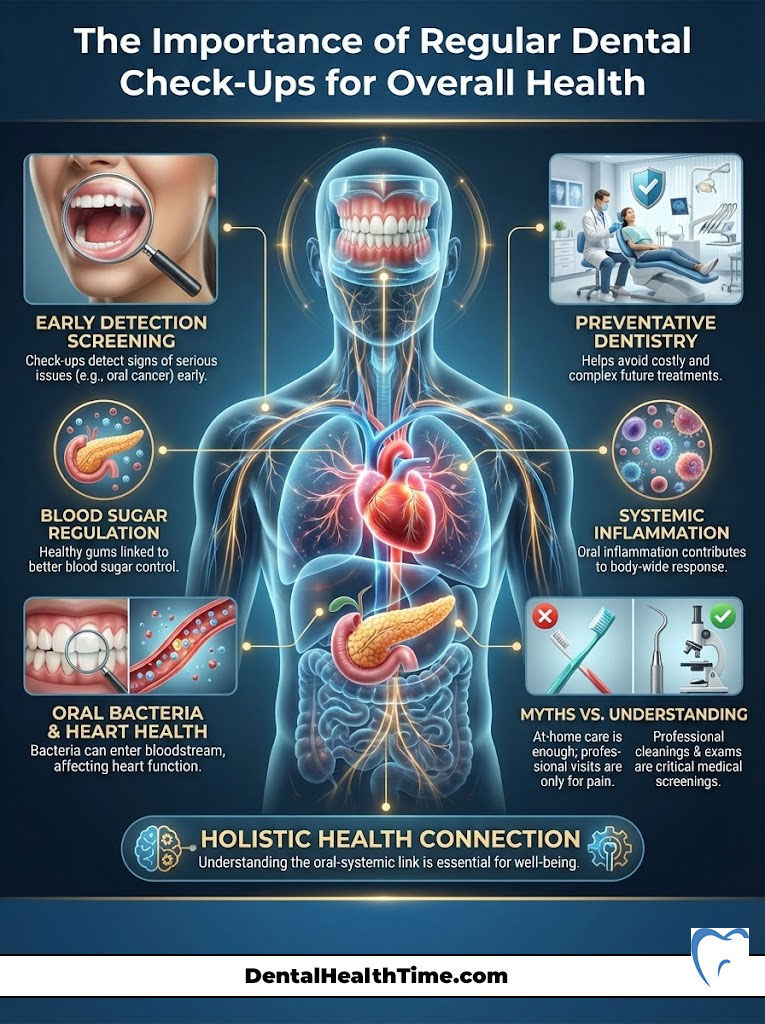
When you sit in the dental chair you are not just getting your teeth cleaned. You are undergoing a comprehensive evaluation that protects your heart, regulates your blood sugar, and safeguards your financial future. This guide serves as a definitive resource on preventative dentistry. We will dismantle the myths of at-home care, explore the deep biological links between oral and systemic health, and provide the financial logic that makes skipping your six-month appointment a costly mistake.
Understanding Preventative Dentistry as a Medical Necessity
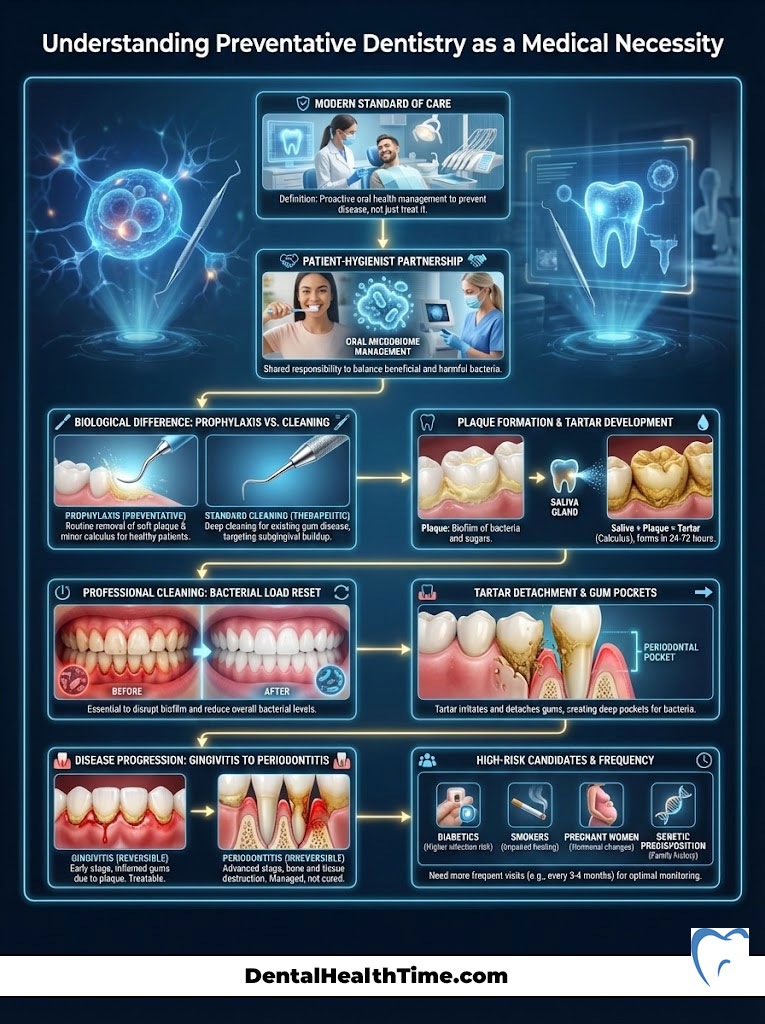
Preventative dentistry is the modern standard of care in the United States. Unlike the dentistry of the past which focused largely on extraction and repair, today’s focus is on disease evasion. This proactive approach relies on a partnership between the patient and the dental hygienist to manage the oral microbiome before it turns destructive.
The Biological Difference Between Prophylaxis and a Standard Cleaning
To understand why a professional visit is non-negotiable we must look at the biology of the mouth. Your mouth is home to over 700 species of bacteria. Some are beneficial while others like Streptococcus mutans are destructive. These bacteria colonize to form a sticky film known as plaque.
When you brush you disrupt this biofilm. However, saliva contains calcium and other minerals that essentially fossilize any plaque left behind. This hardened substance is called tartar or calculus. Once tartar forms it bonds to the enamel with a strength similar to cement. No toothbrush, floss, or water flosser can remove it.
A professional teeth cleaning, medically known as prophylaxis, utilizes ultrasonic scalers that vibrate at high frequencies to shatter these calculus deposits without damaging the tooth structure. This process is the only way to reset the bacterial load in the mouth and prevent the chronic inflammation that leads to gum disease.
How Biofilm and Tartar Destroy Enamel Over Time
The destruction caused by missed appointments is slow and silent. Tartar does not just sit on the teeth. It grows downward below the gumline. As it pushes down it detaches the gum tissue from the tooth root creating “pockets.”
In a healthy mouth, the collar of gum tissue around the tooth is tight, preventing bacteria from entering the bloodstream. In a neglected mouth, tartar forces this collar open. This allows anaerobic bacteria—those that thrive without oxygen—to multiply deep in the gum pockets. These bacteria release toxins that eat away at the jawbone. This is the transition from gingivitis (reversible gum inflammation) to periodontitis (irreversible bone loss). Regular dental check-ups interrupt this cycle by removing the irritant before bone loss occurs.
Identifying High-Risk Candidates for Frequent Dental Wellness Visits
While the standard “every six months” rule applies to healthy individuals, the American Dental Association (ADA) and Centers for Disease Control and Prevention (CDC) guidelines suggest that many Americans need more frequent monitoring.
You may require routine dental care every three to four months if you fall into these categories:
- Tobacco Users: Smoking constricts blood vessels in the gums which masks the signs of infection like bleeding. This allows periodontal disease to progress unnoticed.
- Diabetic Patients: Uncontrolled blood sugar acts as fuel for oral bacteria increasing the risk of fulminant infection.
- Pregnant Women: Elevated progesterone levels cause an exaggerated inflammatory response to plaque known as “pregnancy gingivitis.”
- Dry Mouth Sufferers: Saliva is the mouth’s natural defense. Patients taking medications for blood pressure or anxiety often suffer from Xerostomia (dry mouth) which accelerates cavity detection rates.
The Critical Mouth-Body Connection and Systemic Disease
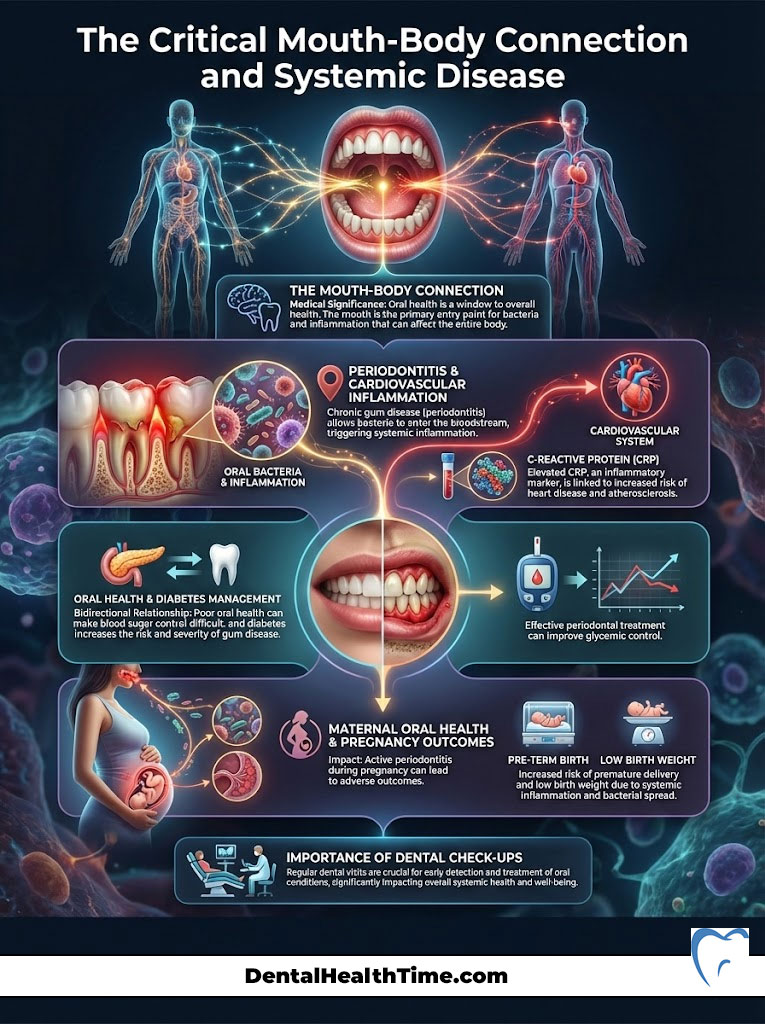
The phrase “Mouth-Body Connection” is not just marketing jargon. It is a documented medical fact reinforced by decades of peer-reviewed research. The mouth is highly vascular which means that pathogens in the oral cavity have a direct highway to the heart, lungs, and brain.
The Link Between Periodontitis and Cardiovascular Inflammation
Heart disease remains the leading cause of death in the USA. Research published by the American Heart Association has found a disturbing correlation between gum disease and cardiovascular health. The mechanism is inflammation.
When gums are infected the body produces inflammatory markers such as C-reactive protein (CRP). These proteins travel through the bloodstream and can contribute to the formation of arterial plaque and blood clots. Furthermore, oral bacteria have been found embedded in the atherosclerotic plaque of heart attack victims. By committing to regular dental check-ups you are actively lowering the total inflammatory burden on your cardiovascular system.
Managing Diabetes Through Consistent Oral Health Examinations
The relationship between diabetes and periodontal health is bidirectional. This means they feed into each other in a dangerous loop.
- Effect of Diabetes on Gums: High blood glucose levels weaken white blood cells. This impairs the body’s ability to fight off bacterial infections in the gum pockets leading to rapid bone loss.
- Effect of Gums on Diabetes: Severe periodontitis is an active infection. Like any infection it increases the body’s insulin resistance leading to spikes in blood sugar that are difficult to control.
For the millions of Americans managing Type 1 or Type 2 diabetes, the dental exam is a critical part of glycemic control. Treating the gum infection can often lead to an immediate improvement in HbA1c levels.
The Impact of Maternal Oral Health on Pregnancy Outcomes
Obstetricians and dentists now work closely together because oral health directly impacts fetal development. The American Dental Association (ADA) confirms that active periodontitis in pregnant women is a risk factor for pre-term birth and low birth weight.
The theory is that the bacteria from the mouth release prostaglandins, labor-inducing chemicals, into the bloodstream. This can trigger the body to go into labor prematurely. A dental wellness visit during the second trimester is widely considered the safest window to perform plaque and tartar removal protecting both the mother and the unborn child.
Deconstructing the Comprehensive Dental Exam Experience
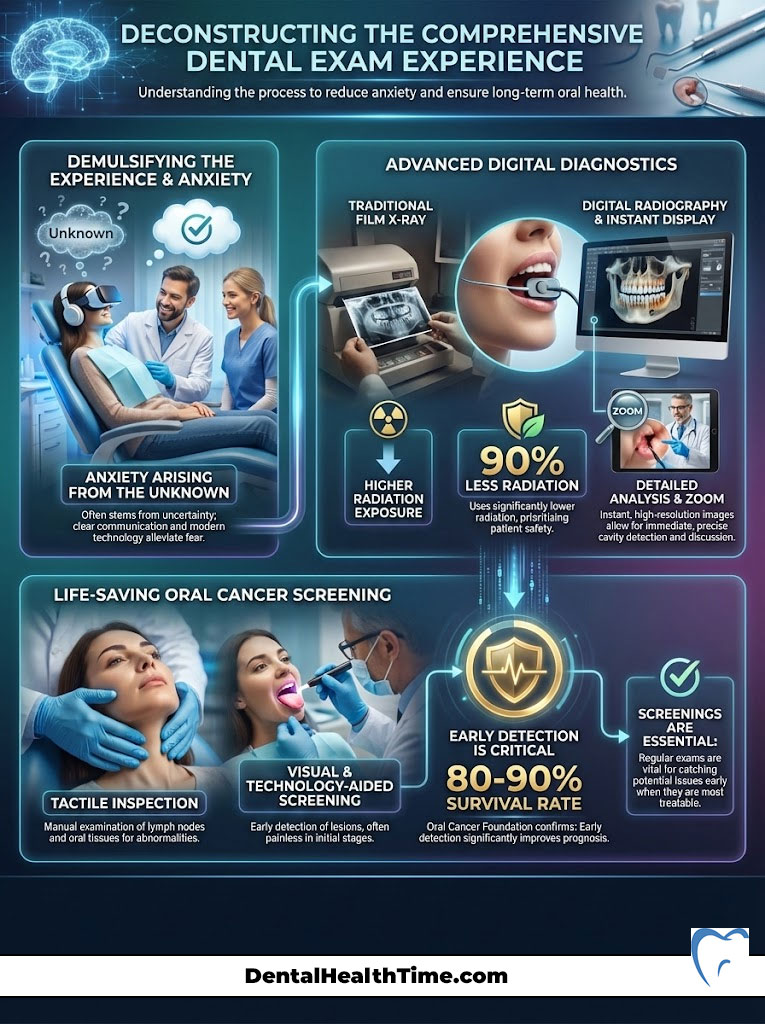
Anxiety often stems from the unknown. By demystifying the comprehensive dental exam, we can appreciate the technological marvels used in modern US clinics to ensure accurate diagnosis.
Utilizing Digital Radiography for Precise Cavity Detection
Visual exams have limitations. A dentist cannot see between tight contacts of teeth or underneath old silver fillings. This is where dental X-rays (digital radiography) are essential.
- Bitewings: These images show the crowns of the back teeth. They are the gold standard for cavity detection between teeth where floss often misses.
- Periapicals: These show the entire tooth from crown to root. They are crucial for identifying abscesses, cysts, or bone loss caused by gum disease.
Modern digital sensors use up to 90% less radiation than the film X-rays of the past. The images appear instantly on a screen allowing the dentist to zoom in and show you exactly what is happening inside your tooth structure.
The Life-Saving Importance of Early Oral Cancer Screening
The most vital few minutes of your regular dental check-up involve the oral cancer screening. Oral cancer is particularly dangerous because it rarely causes pain in its early stages. By the time a patient notices a lump or a sore that won’t heal, the cancer may have already metastasized.
During the exam the dentist performs a tactile inspection of the lymph nodes in the neck and jaw. They examine the lateral borders of the tongue, the floor of the mouth, and the soft palate. According to the Oral Cancer Foundation, early detection leads to an 80-90% survival rate. This screening alone justifies the time and cost of the appointment.
Comparing At-Home Hygiene vs Professional Dental Care
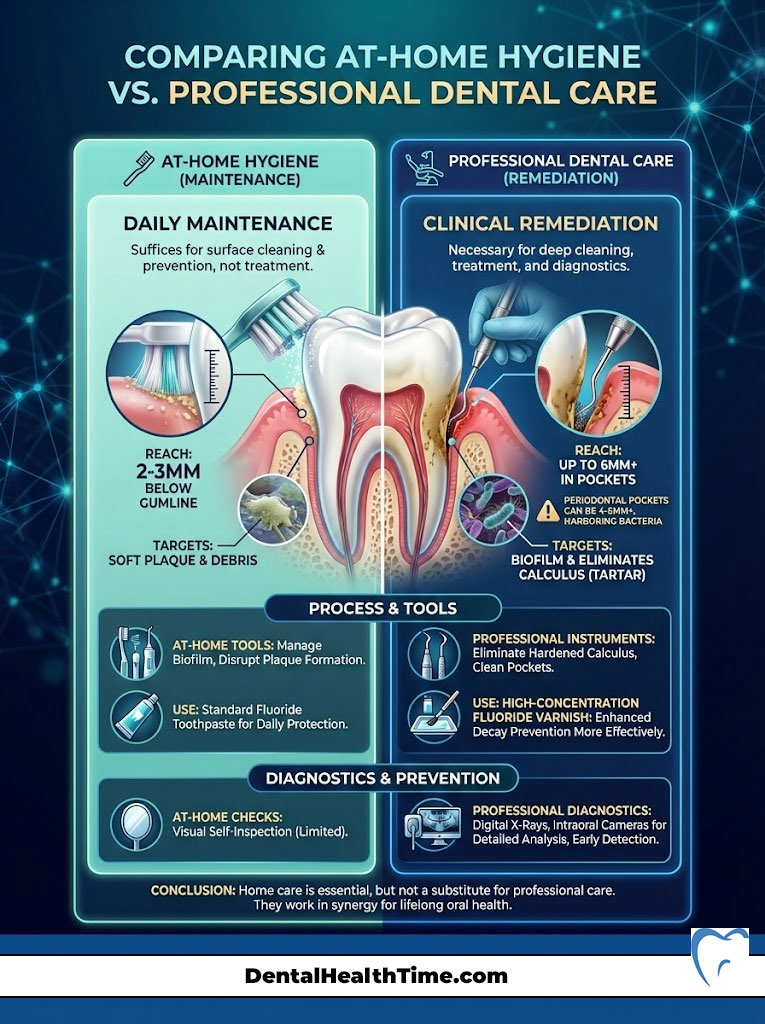
A common objection to scheduling a visit is the belief that diligent home care is sufficient. While brushing and flossing are the foundation of oral health, they are maintenance tasks not remediation tasks. Home care manages the biofilm but professional care eliminates the calculus.
Limitations of Toothbrushing and Flossing for Tartar Removal
The anatomy of a tooth includes deep grooves and tight contact points. Even the most advanced electric toothbrush cannot reach more than 2-3 millimeters below the gumline. However, periodontal pockets can be 4, 5, or 6 millimeters deep. Bacteria in these deep pockets are unreachable by home tools. Without professional intervention, these bacteria thrive undisturbed.
Table 1: Comparative Analysis of Home Hygiene vs. Professional Intervention
| Feature | At-Home Care (Daily Maintenance) | Professional Care (The Dental Visit) |
| Primary Tool | Toothbrush, Floss, Water Flosser. | Ultrasonic Scaler, Hand Instruments, Prophy Jet. |
| Target Substance | Soft Plaque (Biofilm) and Food Debris. | Calcified Tartar (Calculus) and extrinsic stains. |
| Reach Capability | 1-3mm below the gumline. | Full reach to the base of the periodontal pocket (up to 9mm+). |
| Diagnostic Power | Visual check in a mirror (limited). | Digital X-rays, Intraoral Cameras, AI Diagnostics. |
| Cancer Detection | Self-exams often miss subtle tissue changes. | Professional palpation of lymph nodes and posterior throat. |
| Decay Prevention | Fluoride toothpaste strengthens enamel. | High-concentration fluoride varnish re-mineralizes soft spots. |
The Financial Intelligence of Routine Dental Care in the USA
In the complex landscape of American healthcare dentistry is unique. It is one of the few medical fields where the cost of prevention is a fraction of the cost of cure. Viewing a dental check-up without insurance USA as an “expense” is a financial error. It is an asset protection strategy.

Analyzing the Cost of Preventative Care vs Restorative Emergencies
Let us look at the numbers.
The average cost of a routine hygiene visit — including an exam and X-rays — ranges from $150 to $300, depending on your location. In contrast, the cost of neglecting a problem until it becomes painful grows exponentially.
A small cavity that could be treated with a simple filling for about $200 can rapidly progress to the nerve. Once the nerve becomes infected, the tooth typically requires a root canal ($1,200+) followed by a crown ($1,500+).
If the tooth cannot be saved, it must be extracted and replaced with a dental implant, which usually costs $4,000 or more.
In other words, spending roughly $600 per year on two preventive checkups can save you $4,000 or more in emergency dental treatment later.
Maximizing Dental PPO and HMO Plans Before Benefits Expire
For those with Dental PPO and HMO Plans, understanding your policy is crucial.
- The “100-80-50” Rule: Most PPO plans cover preventative dentistry (cleanings, exams) at 100%. They cover basic fillings at 80% and major work (crowns) at 50%. Insurance companies structure plans this way because they know prevention is cheaper than reconstruction.
- Use It or Lose It: Dental insurance benefits typically reset on January 1st. If you have a $1,500 annual maximum and you do not use it for your check-ups that money disappears. It does not roll over. By skipping your fully covered dental wellness visit, you are essentially donating your premiums back to the insurance company.
Table 2: The Financial Cost of Dental Neglect Over Time
| Clinical Condition | Preventative Strategy Cost | Reactive Treatment Cost | Financial Impact |
| Enamel Health | $0 – $50 (Fluoride Varnish) | $200 – $400 (Composite Filling) | 4x – 8x Increase |
| Gum Infection | $150 (Routine Prophylaxis) | $1,000+ (Deep Cleaning/Scaling & Root Planing) | 6x Increase |
| Nerve Damage | $200 (Early Filling) | $2,500+ (Root Canal & Crown) | 12x Increase |
| Tooth Loss | $300 (Regular Exams to save tooth) | $4,500+ (Extraction, Bone Graft, Implant, Crown) | 15x Increase |
| Oral Cancer | Included in standard exam | $50,000 – $100,000+ (Oncology & Surgery) | Catastrophic |
Overcoming Dentophobia and Managing Dental Anxiety
Fear is a legitimate and powerful barrier. Dentophobia affects millions of Americans often stemming from a negative childhood experience. However, avoiding the dentist due to fear inevitably leads to more extensive dental work later which reinforces the fear. Breaking this cycle requires a modern approach.

Sedation Dentistry Options for a Stress-Free Visit
If the sounds and sensations of a professional teeth cleaning trigger anxiety ask your provider about sedation options.
- Nitrous Oxide (Laughing Gas): A mild sedative inhaled through a nose mask. It induces relaxation and wears off immediately allowing you to drive yourself home.
- Oral Conscious Sedation: A pill (such as Halcion or Valium) taken an hour before the appointment. This creates a “twilight” state where you are awake but unconcerned with the procedure.
- IV Sedation: For extreme cases or complex surgeries this puts you in a deeper state of relaxation where you likely will have no memory of the appointment.
Communication Strategies to Empower Patients in the Chair
You have control in the dental chair. Establishing communication protocols with your dentist adds a layer of Trustworthiness.
- The Stop Signal: Agree on a hand signal (like raising your left hand). If you feel pain or need a break, the dentist stops immediately.
- Explain-First Approach: Ask your dentist to explain what they are going to do before they do it. “I am going to use cold air now” can prepare your mind and reduce the startle response.
- Distraction Techniques: Many offices provide noise-canceling headphones or ceiling-mounted TVs. Bringing your own podcast or audiobook can also dissociate your mind from the clinical environment.
Pediatric and Geriatric Dental Check-Up Considerations
Oral health needs shift dramatically as we age. Regular dental check-ups must be tailored to the specific life stage of the patient.

Establishing a Dental Home for Children and Early Orthodontics
The American Academy of Pediatric Dentistry recommends a child’s first visit occur by age one. This “Happy Visit” is less about cleaning and more about acclimatization. It allows the dentist to check for “Baby Bottle Tooth Decay” and assess jaw development.
Early visits also allow for the detection of airway issues or thumb-sucking habits that could require orthodontic intervention later. Applying dental sealants—a protective coating on the molars—during school years is a proven strategy for cavity detection and prevention.
Addressing Dry Mouth and Root Decay in Senior Patients
As we age gum recession becomes common exposing the tooth roots. Unlike the crown, roots are not covered in hard enamel. They are covered in softer cementum which decays rapidly.
Seniors are also disproportionately affected by Xerostomia (dry mouth) due to polypharmacy (taking multiple medications). Saliva is the mouth’s natural buffer against acid. Without it, decay accelerates. Regular dental check-ups for seniors often involve high-fluoride prescription toothpaste and more frequent screenings for oral cancer which has a higher incidence rate in populations over 60.
Urgent Warning Signs Requiring Immediate Professional Attention
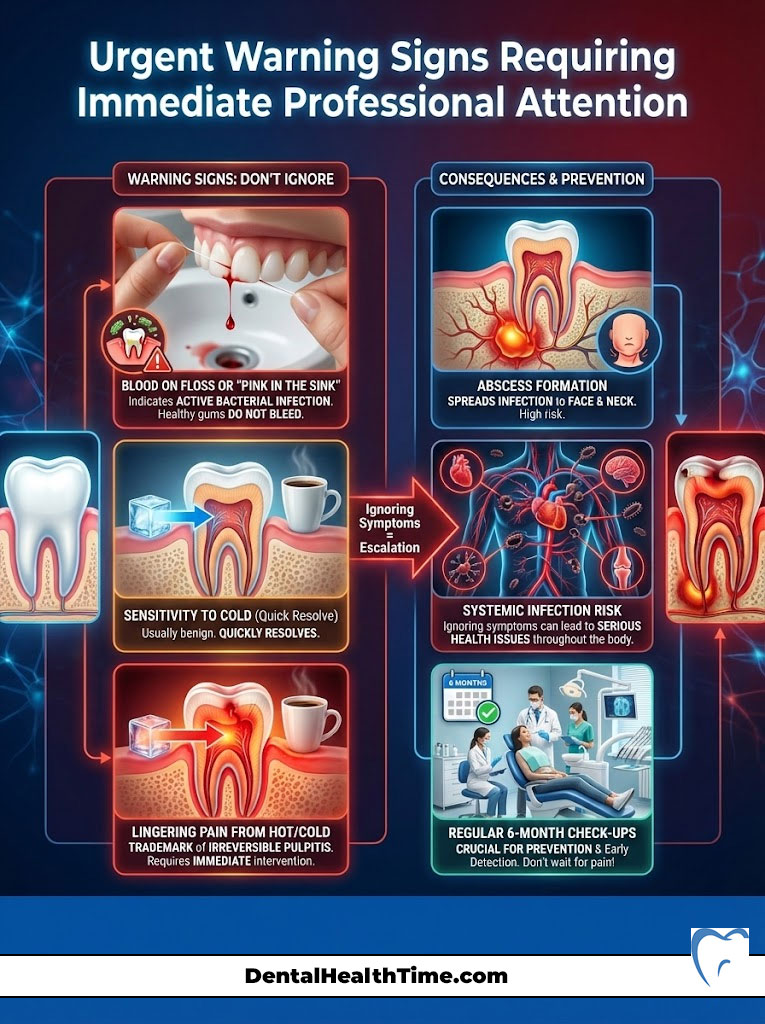
While sticking to a six-month schedule is ideal your body may give you warning signals that require an emergency dental exam. Ignoring these signs can lead to systemic infection.
Recognizing the Symptoms of Advanced Periodontal Disease
Healthy gums do not bleed. If you notice blood on your floss or “pink in the sink” after brushing, this is an active bacterial infection. Other signs include:
- Persistent Halitosis: Bad breath that returns shortly after brushing indicates bacteria rotting tissue or food debris trapped in deep pockets.
- Receding Gums: If your teeth look “longer” than before, it means the bone supporting them is dissolving.
- Loose Teeth: This is a late-stage symptom of periodontitis indicating substantial bone loss.
When Tooth Sensitivity Indicates Irreversible Pulpitis
Sensitivity to cold that goes away quickly is usually just sensitive dentin. However, lingering pain to hot or cold liquids that lasts for minutes after the stimulus is removed indicates irreversible damage to the tooth nerve (pulp). This condition, known as pulpitis, will not heal on its own. It requires immediate intervention to prevent an abscess—a pocket of pus at the root tip that can spread infection to the face and neck.
Frequently Asked Questions (FAQ)
How often should a healthy adult get a dental check-up?
For the average adult with good oral hygiene and low risk factors, the American Dental Association (ADA) recommends a dental wellness visit every six months. However, those with a history of periodontal disease or those undergoing orthodontic treatment may need to visit every three to four months to maintain stability.
Does dental insurance cover X-rays at every visit?
Dental insurance policies vary. Typically, Dental PPO and HMO Plans cover “Bitewing” X-rays (checking for cavities between back teeth) once every 12 months. A “Full Mouth Series” or Panorex, which checks the roots and jawbone, is usually covered once every 3 to 5 years.
Why do my gums bleed after a professional cleaning?
Bleeding is a sign of inflammation, not injury. If your gums bleed during a professional teeth cleaning, it indicates active gingivitis. The removal of bacteria triggers the body’s healing response. With proper home care following the visit, the bleeding should stop within a few days.
Can a dentist tell if I have diabetes or heart problems?
While a dentist cannot formally diagnose systemic diseases, the mouth often reveals the first signs. Uncontrolled diabetes often presents as rapid bone loss, gum abscesses, or fruity-smelling breath. Heart issues may be suspected if there is severe inflammation or if the patient reports medications that cause gum overgrowth.
What is the average cost of a dental check-up without insurance in the US?
Prices depend on the cost of living in your area. On average, a new patient appointment including a comprehensive dental exam, full X-rays, and a cleaning ranges from $200 to $400. Many private practices offer “Dental Savings Plans” for uninsured patients to reduce these fees.
Is it safe to get a dental check-up while pregnant?
Yes, it is critical. The American Congress of Obstetricians and Gynecologists agrees that dental care is safe and necessary during pregnancy. The second trimester is the ideal time for routine care to prevent pregnancy gingivitis, which can impact birth outcomes.
What is the difference between a standard cleaning and a deep cleaning?
A standard cleaning (Prophylaxis) is for healthy gums; it removes tartar above the gumline. A deep cleaning (Scaling and Root Planing) is a medical treatment for periodontal disease. It involves numbing the mouth to remove bacterial deposits from deep pockets below the gumline and smoothing the root surfaces.
How does regular cleaning prevent bad breath (halitosis)?
Chronic bad breath is often caused by volatile sulfur compounds (VSCs) produced by bacteria trapped in hardened tartar. Mouthwash only masks the odor. Plaque and tartar removal physically eliminates the bacterial colony producing the smell.
Are digital dental X-rays safe regarding radiation?
Yes. Modern digital radiography is extremely safe. The amount of radiation exposure from a full set of dental X-rays is roughly equivalent to the background radiation you absorb from the sun during a short day at the beach. Lead aprons are used as an extra precaution.
At what age should a child have their first dental visit?
The rule of thumb is “First visit by first birthday.” Early exposure helps the child build trust with the dentist and allows parents to learn about proper diet and cleaning techniques to prevent early childhood caries (cavities).
Can I remove tartar at home without a dentist?
No. Tartar is calcified mineral. Attempting to scrape it off with metal tools bought online is dangerous. You risk gouging your enamel or slicing your gum tissue, which can lead to permanent recession or infection.
What should I do if I have severe dental anxiety?
Be vocal about your fears when booking. Look for offices that advertise “Sedation Dentistry.” Techniques ranging from Nitrous Oxide (laughing gas) to oral sedation can make the appointment feel like it lasts only minutes. Bringing headphones and agreeing on a “stop signal” also helps.
Disclaimer
The information contained in this article is for educational and informational purposes only and does not constitute medical or dental advice. The content is not intended to be a substitute for professional medical advice, diagnosis, or treatment. Always seek the advice of your dentist or other qualified health provider with any questions you may have regarding a medical condition or oral health treatment. Never disregard professional medical advice or delay in seeking it because of something you have read in this article.
References
- American Dental Association (ADA): Oral-Systemic Health Resources.
- Centers for Disease Control and Prevention (CDC): Periodontal Disease Surveillance Report.
- American Heart Association: Scientific Statement on Periodontal Disease and Atherosclerotic Vascular Disease.
- Oral Cancer Foundation: Screening and Early Detection Guidelines.
- Journal of Periodontology: The effects of periodontal treatment on glycemic control in diabetic patients.