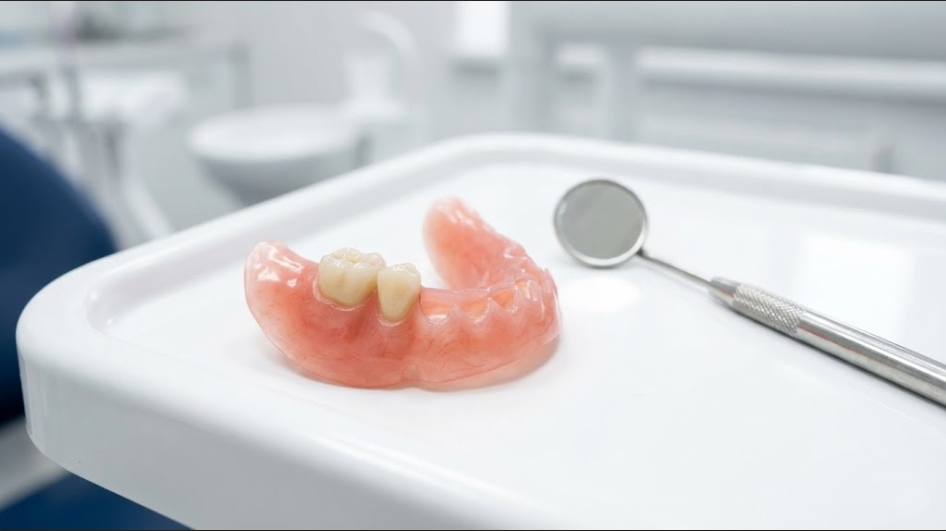

In my two decades of clinical practice as a restorative dentist, I have consulted with countless patients who arrive at my office wearing a dental flipper that was fabricated years ago. They often view this device as a convenient, low-cost permanent solution for a missing tooth. It fills the gap. It restores the smile. It initially feels adequate. However, in the specialized field of prosthodontics, this device is strictly classified as an interim partial denture.
Table of Contents
Distinguishing between a temporary placeholder and a permanent restoration is vital for your long-term oral health. Failing to understand this difference can lead to irreversible damage to your jaw structure. It can compromise the stability of your remaining natural teeth. While a flipper tooth serves a valuable purpose in the short term, extending its life beyond clinical recommendations moves a patient from a phase of healing into a phase of active deterioration. We need to have a serious conversation about what is happening beneath that piece of pink acrylic.
Quick Answer: Clinical Safety Guidelines
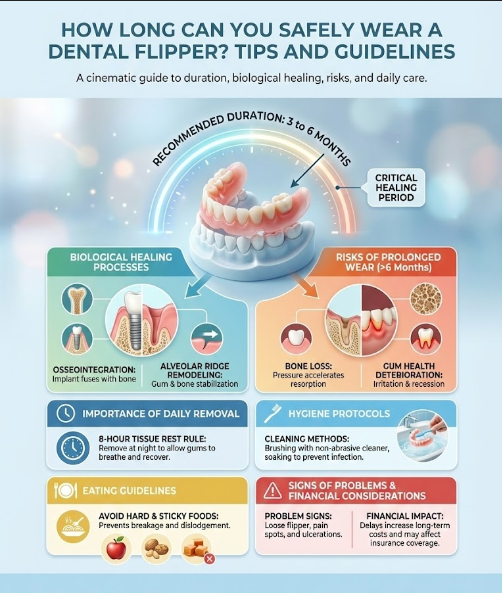
From a medical perspective, a dental flipper is designed for short-term use. This period generally falls between three to six months. This specific timeframe aligns with the healing phase of soft tissues or the osseointegration period for dental implants. Wearing a flipper for extended periods accelerates alveolar bone resorption. It causes gum recession on abutment teeth. It significantly increases the risk of fungal infections like denture stomatitis. Once initial healing is complete, patients must transition to a permanent restoration for long-term stability.
The Clinical Standard: How Long is “Safe”?
The American College of Prosthodontists (ACP) and general clinical standards recommend that a dental flipper be used for no longer than 3 to 6 months. This specific duration is not an arbitrary number picked out of thin air. It corresponds directly with the biological timeline of healing. This includes osseointegration. That is the process where a dental implant fuses with the jawbone. It also covers the remodeling of the alveolar ridge following a tooth extraction.
When a tooth is extracted, the body initiates a complex healing sequence. During the first few months, the socket fills with new bone. The gum tissue matures during this time. A temporary tooth like a flipper is used during this window to maintain aesthetics. It also prevents adjacent teeth from drifting. However, once that biological window closes, the prosthetic’s role changes. If you continue to wear it, you are no longer “healing.” You are potentially causing harm.
There is a misconception that if the appliance is not causing acute pain, it is safe. This is dangerous thinking. Bone loss is a silent, painless process. By the time a patient notices their flipper is becoming loose or their gum line is receding, significant biological damage has already occurred. The safety limit is defined by the biology of the bone, not the comfort of the patient.
Key Statistics: The Cost of Delay
- Bone Loss Rate: Research indicates up to 50% of alveolar ridge width can be lost within the first year of tooth loss if not properly stimulated.
- Infection Risk: Studies show that denture stomatitis affects up to 65% of removable denture wearers. This primarily affects those who wear appliances overnight.
- Prosthetic Lifespan: The average functional life of an acrylic flipper before material fatigue sets in is roughly 6 to 12 months.
- Insurance Limits: Most dental insurance plans limit replacement of interim prosthetics to once per 5 years. This is often per lifetime for a specific tooth site.
The Physiology of Risk: What Happens After 6 Months?
Patients often ask me a simple question. “If it doesn’t hurt, why can’t I keep wearing it?” The answer lies in how the prosthetic interacts with oral biology. A flipper is classified as a “tissue-borne” prosthesis. This means it rests entirely on your gums. It relies on the soft tissue for support rather than the jawbone or tooth roots. This distinction is critical.
1. Mechanism of Alveolar Bone Resorption
Bone is a dynamic tissue. It requires stimulation to maintain its density. This principle is known as Wolff’s Law. Natural tooth roots or endosseous implants provide this stimulation. They create tensile strain on the bone during chewing. When you bite down on a natural tooth, the pressure signals the body to send calcium and nutrients to that area of the jaw. The body recognizes that the bone is in use.
A dental flipper does the opposite. Because it sits on top of the gum, it applies compressive force to the underlying bone. It does not simulate a root. According to literature in the Journal of Prosthetic Dentistry, this lack of internal stimulation accelerates bone loss. Combined with surface pressure, this causes alveolar bone resorption. The bone literally shrinks away from the pressure. Over years, this results in a “collapsed” ridge. This makes future placement of dental implants difficult. It often requires expensive bone grafting procedures later.
2. Periodontal Ligament and Abutment Health
Flippers typically use wrought wire clasps for retention. These metal hooks grip the adjacent natural teeth. We call these abutment teeth. These teeth are meant to handle vertical forces. They are designed for chewing up and down. They are not designed for lateral forces. That means pulling side to side.
Every time you insert or remove the flipper, you apply force. Every time you chew and the flipper rocks slightly, it places torque on these healthy teeth. Over time, this lateral stress can widen the periodontal ligament space. This leads to mobility. I have seen patients lose perfectly healthy virgin teeth simply because they served as anchors for a loose flipper for too long. The clasp acts like a slow-motion extraction tool over the course of several years.
3. Plaque Biofilm and Stomatitis
The base of a flipper is fabricated from polymethyl methacrylate (PMMA) acrylic. While this material looks smooth to the naked eye, it is inherently porous on a microscopic level. These pores act as a sponge. They absorb saliva. They trap food particles. They harbor bacteria.
Without hospital-grade hygiene protocols, these pores become a breeding ground for bacterial biofilm. Fungal species like Candida albicans thrive here. This colonization frequently results in denture stomatitis. This is a condition characterized by angry, red, inflamed tissue under the palate. It is often painless initially. This is why many patients are unaware they have a fungal infection until I show them a photo of the roof of their mouth.
Detailed Comparison: Flipper vs. Permanent Solutions
To understand why transitioning is necessary, we must compare the functional capabilities of an interim partial denture against permanent restorative options. You need to see the difference in engineering. The following table breaks down the clinical differences.
| Feature | Dental Flipper (Interim) | Dental Implant | Fixed Dental Bridge |
|---|---|---|---|
| Primary Indication | Temporary healing phase (3-6 mos) | Permanent tooth replacement | Permanent tooth replacement |
| Support Mechanism | Tissue-Borne (Rests on Gums) | Bone-Borne (Fused to Jaw) | Tooth-Borne (Supported by Teeth) |
| Bone Preservation | Accelerates Bone Loss | Maintains Bone Density | Neutral (Bone under pontic may shrink) |
| Chewing Efficiency | Low (10-20% of natural ability) | High (90-100% of natural ability) | High (80-90% of natural ability) |
| Esthetics | Good initially; stains easily | Excellent; mimics natural emergence | Very Good |
| Risk to Neighbors | High (Clasp wear, torque) | None (Independent unit) | Moderate (Requires shaving down teeth) |
The data in this table highlights a stark reality. The dental flipper is inferior in every functional category. It is a cosmetic prop. It is not a functional tool. Relying on it for years is akin to walking on a broken leg with a crutch and never setting the bone.
Material Science: Understanding Acrylic Resin
The limitations of a flipper tooth are largely dictated by the material from which it is made. Most flippers are constructed from PMMA (Polymethyl Methacrylate). While versatile, this material is brittle. It has specific chemical properties that patients must understand.
The Porosity Problem
As mentioned earlier, acrylic is hydroscopic. This means it absorbs water. Along with water, it absorbs pigments from coffee. It soaks up tannins from tea and wine. It absorbs nicotine from tobacco. This is why an older flipper often looks yellowed or dull compared to natural teeth. More concerning is the absorption of odor-causing bacteria. If you have ever noticed a distinct, unpleasant smell coming from your appliance, it is because the bacteria have penetrated deep into the resin matrix. A simple toothbrush cannot reach these depths.
Valplast and Flexible Alternatives
Some patients opt for flexible partials. These are often known by brand names like Valplast. These are made from thermoplastic nylon. While they are more comfortable and aesthetic because they lack metal clasps, they present their own set of long-term problems. Flexible partials are even more “tissue-borne” than acrylic ones. They flex under chewing pressure. This can pump the gum tissue. It can accelerate bone loss even faster in some cases. Furthermore, they are notoriously difficult to reline or repair. If a flexible partial becomes loose due to gum shrinkage, it often must be completely remade.
The Breakage Factor
Acrylic has poor impact strength. It has low fatigue resistance. It is not designed to withstand the average bite force of a human adult. That force can range from 150 to 250 pounds per square inch in the molar region. This is why flippers fracture so easily. They are meant for aesthetics. They are for smiling. They are not for function. When patients attempt to eat hard foods, the acrylic flexes. Eventually, it snaps. This often happens right down the midline.
Practical Strategies for Safe Wear (The Maintenance Guide)
For patients currently in the interim phase, strict adherence to maintenance protocols is mandatory. You must minimize tissue damage. Until you can proceed with your permanent restoration, follow these expert guidelines.
Expert Protocol: The 8-Hour Rule
The prosthetic must be removed for a minimum of 8 hours daily. This typically happens during sleep. This “tissue rest” is vital. Your gum tissue is covered by the acrylic plate all day. This restricts fresh saliva flow and oxygenation. Removing the flipper at night allows the blood vessels in the mucosa to recover. It reduces the fungal load. Never sleep with your flipper in place. Beyond the tissue health risks, there is a genuine danger of aspirating (choking on) a small removable appliance during sleep.
Hygiene Protocols
Cleaning a removable partial denture requires a different approach than cleaning natural teeth. You cannot treat them the same.
- Chemical vs. Mechanical: Do not use regular toothpaste on your flipper. Toothpaste contains abrasives like silica. These are designed to polish enamel. Enamel is the hardest substance in the body. Acrylic is soft. Toothpaste will create thousands of micro-scratches on the flipper’s surface. These scratches become traps for stains and bacteria. Instead, use mild dish soap or a specified denture cleaner.
- Ultrasonic Cleaners: For the best results, I recommend purchasing a small ultrasonic cleaner for home use. These devices use sound waves to vibrate debris out of the microscopic pores of the acrylic. It is the most effective way to control odor.
- Mucosal Cleaning: Don’t forget your mouth. When you take the flipper out, gently brush your gums. Brush the roof of your mouth with a soft-bristled brush. This stimulates blood flow. It removes the stagnant layer of saliva that has been trapped under the plate.
Eating and Function
Adopt the “Knife and Fork” rule. A dental flipper cannot shear through food like a natural incisor. If you bite into a sandwich or an apple, the leverage will dislodge the flipper. It might break it. Cut all food into small, bite-sized pieces. Chew with your back teeth. Distribute the force evenly. Avoid sticky foods like caramel or gum. These can pull the appliance out of place. Avoid very hard foods like almonds or ice. These can fracture the acrylic base.
Troubleshooting and Adjustments
As your mouth heals, the landscape of your gum tissue changes. This leads to common issues with fit and comfort. You need to know how to handle them.
The “Loose” Flipper
Following an extraction, the bone resorbs rapidly. This is a natural process. As the bone shrinks, a gap forms between the flipper and your gum. Suddenly, the appliance feels loose. It drops down when you speak. This is not a manufacturing defect. It is a sign of healing. When this happens, you need a reline. This procedure involves adding new acrylic to the base of the flipper. It fills the gap and restores stability.
Pain Spots and Ulcerations
If the flipper presses too hard on any specific spot, it will cut off blood supply. This causes an ulcer. These are painful. They look like small white craters with red borders. Do not try to “tough it out.” This requires a professional adjustment to relieve the pressure spot.
Warning: Do not attempt to adjust the flipper yourself with nail files or sandpaper. You will likely ruin the fit. You may leave a rough surface that injures your tongue.
Exceptions to the 6-Month Rule
There are rare clinical scenarios where I might advise a patient to wear an interim partial denture for longer than six months. These are specific medical situations. They are not matters of convenience.
- Pediatric Cases: Young patients who have lost a permanent tooth present a challenge. Their jaws are still growing. They cannot yet receive dental implants. In these cases, a flipper acts as a space maintainer. It stays until growth ceases. This often happens around age 18 to 21.
- Medical Compromise: Patients undergoing radiation therapy or chemotherapy may have delayed healing. Those taking bisphosphonates are also at risk. They may require a longer provisional phase before surgical intervention is safe.
- Phased Treatment Plans: In complex full-mouth rehabilitation cases, we may use interim appliances. We use them to test changes in the vertical dimension of occlusion (bite height). We do this before fabricating final restorations.
However, financial constraints are a real concern for many families. Yet, they do not negate the biological risks associated with long-term wear. The bone does not “know” you are waiting to save money. It simply reacts to the lack of stimulation by resorbing.
Financial Considerations and Insurance
Understanding how insurance categorizes these devices can help you plan your budget. Dental insurance typically codes a flipper as an “Interim Partial Denture” (CDT Codes D5820 or D5821). The word “interim” is key here. Many policies will pay for this interim device. They will also pay for the final restoration. This is provided they are done in the correct sequence.
However, if you delay the final restoration for years, the insurance company may deny the claim. They might argue that you have already been “restored” with the flipper. It is financially savvy to stick to the treatment timeline. Furthermore, a flipper is cheaper upfront. It often costs between $400 and $800. An implant can cost between $3,000 and $5,000. However, the long-term cost of bone grafting required to fix a ridge destroyed by a flipper can easily exceed the cost of the implant itself.
Case Studies and Clinical Examples
Real-world examples illustrate the difference between following the protocol and ignoring it. Here are two common scenarios.
Case A: The Ideal Timeline
A 35-year-old patient lost an upper central incisor due to trauma. We fabricated an immediate dental flipper. He wore it for 4 months while the socket healed. He removed it every night. He cleaned it with alkaline peroxide. At month 4, his ridge was healed. We placed a dental implant. He continued to wear the flipper for another 3 months during osseointegration. We relieved the flipper to fit over the implant. Result: Perfect bone levels. Healthy gums. A seamless transition to a ceramic crown.
Case B: The 5-Year Flipper Wearer
A 50-year-old patient wore a flipper for 5 years to save money. When she finally decided she wanted an implant, we took a CBCT scan. It revealed she had lost 6mm of horizontal bone width. This was due to the compressive force of the flipper. The abutment teeth holding the clasps had also suffered gum recession. She required extensive block bone grafting. This added $2,500 to her treatment cost. It added 6 months to her healing time. This illustrates the “penny wise, pound foolish” nature of long-term flipper wear.
Summary & Key Takeaways
While a dental flipper is an excellent tool for restoring your smile immediately after tooth loss, it is not a biological substitute for a tooth. It is a cosmetic bandage. It serves a distinct purpose for a distinct time.
- Adhere to the Timeline: Plan to transition to a permanent solution within 3 to 6 months. This could be an Implant, Bridge, or Cast Metal Partial.
- Respect the Biology: Understand that “tissue-borne” appliances cause alveolar bone resorption if worn long-term.
- Maintain Hygiene: Remove the appliance for 8 hours every night. This prevents denture stomatitis and fungal infections.
- Monitor Fit: If the appliance becomes loose, see your dentist for a reline. Do not use over-the-counter glues or liners permanently.
Your oral health is an investment. Do not let a temporary solution become a permanent problem. Consult your dentist today about your transition plan.
Frequently Asked Questions
How long is it clinically safe to wear a dental flipper?
From a prosthodontic perspective, a dental flipper is an interim partial denture designed for 3 to 6 months of use. This timeframe coincides with the biological healing of soft tissues and the osseointegration period for dental implants. Wearing it longer can lead to significant alveolar bone resorption and tissue deterioration.
Is it safe to sleep while wearing a dental flipper?
No, you should never sleep with a flipper in place. It requires a minimum of 8 hours of ’tissue rest’ daily to allow the mucosa to oxygenate and recover from the compressive forces of the acrylic plate. Sleeping with it also increases the risk of denture stomatitis and accidental aspiration of the appliance.
Why does a dental flipper cause jawbone loss over time?
Flippers are ’tissue-borne’ prosthetics that apply compressive force to the gums rather than stimulating the bone like a natural root or implant. According to Wolff’s Law, bone requires tensile stimulation to maintain density; without it, the body undergoes alveolar ridge resorption, causing the bone to shrink away from the pressure.
How should I clean my interim partial denture to prevent infection?
Avoid using regular toothpaste, as its abrasives create micro-scratches in the PMMA acrylic that harbor bacteria. Instead, use mild dish soap or specialized denture cleaners. For optimal hygiene, use an ultrasonic cleaner to remove biofilm and pathogens from the material’s microscopic pores.
What are the risks of using a flipper for several years instead of getting an implant?
Long-term wear often results in a ‘collapsed’ alveolar ridge, which may necessitate expensive bone grafting before an implant can be placed. Additionally, the wrought wire clasps can place excessive lateral torque on abutment teeth, potentially leading to periodontal ligament widening and tooth mobility.
Why has my dental flipper become loose and unstable after a few months?
This is usually due to the natural remodeling of the bone and gum tissue following an extraction. As the alveolar ridge shrinks, a gap forms between the tissue and the acrylic base. This is a sign of healing and requires a professional reline to add new acrylic and restore stability.
Can I eat hard or sticky foods while wearing a flipper?
You should follow the ‘knife and fork’ rule, cutting food into bite-sized pieces and chewing with your posterior teeth. Flippers have low impact strength and poor fatigue resistance; they are prone to fracturing under the 150-250 psi of force generated during heavy mastication.
What is denture stomatitis and why do flipper wearers get it?
Denture stomatitis is a fungal infection, often caused by Candida albicans, that creates red, inflamed tissue under the prosthetic. Because PMMA acrylic is porous and hydroscopic, it traps bacteria and fungi, making strict hygiene and nightly removal essential for prevention.
Are flexible partials like Valplast safer for long-term use than acrylic flippers?
While more aesthetic and comfortable, flexible partials are still tissue-borne and can actually accelerate bone loss in some cases by ‘pumping’ the gum tissue during chewing. They are also notoriously difficult to reline or repair compared to traditional acrylic interim devices.
Are there any medical exceptions to the 6-month rule for flippers?
Yes, pediatric patients whose jaws are still growing, or patients with medical compromises like radiation therapy or bisphosphonate use, may require extended use of a flipper as a space maintainer until they are cleared for permanent surgical intervention like an implant.
Does dental insurance typically cover both a flipper and a permanent bridge?
Most insurance plans recognize the sequence of ‘interim’ (CDT codes D5820/D5821) followed by ‘permanent’ restoration. However, if you delay the permanent phase for years, some carriers may deny coverage for the final bridge or implant, arguing the interim device has already restored the site.
What should I do if my flipper is causing a painful sore or ulcer?
Pain spots indicate the appliance is cutting off blood supply to the mucosa, creating an ulcer. You must see your dentist for a professional adjustment. Never attempt to sand or file the acrylic yourself with nail files, as this can ruin the fit and create rough surfaces that harbor more bacteria.
Disclaimer
This article is for informational purposes only and does not constitute medical advice. The timeline for dental restorations can vary based on individual biological factors and healing rates. Always consult a qualified restorative dentist or prosthodontist before making decisions regarding your oral health or long-term tooth replacement plan.
References
- American College of Prosthodontists – prosthodontics.org – Clinical guidelines on the indications and limitations of interim removable partial dentures.
- Journal of Prosthetic Dentistry – Tallgren, A. (1972) – Longitudinal study on the reduction of residual alveolar ridges in denture wearers.
- American Dental Association (ADA) – ada.org – Official standards for tooth replacement materials and PMMA acrylic properties.
- Journal of Prosthodontics – Gendreau, L., & Loewy, Z. G. (2011) – Research on the epidemiology and etiology of denture stomatitis in removable appliance wearers.
- McCracken’s Removable Partial Prosthodontics – Carr & Brown – The authoritative textbook on the design and biological impact of tissue-borne vs. bone-borne prosthetics.