
It is 3:00 AM on a Tuesday. You are awake, pacing the floor of your darkened living room, clutching a bag of melting ice to your swollen jaw. The prescription painkillers the oral surgeon gave you wore off hours ago. The throbbing in your face is so intense it feels like it has a heartbeat of its own, reverberating through your ear and temple. If you are reading this right now, you are likely past the point of wondering if you have a complication. You are now in the desperate, frantic search for relief.
Table of Contents
Finding effective dry socket treatment is a race against time and biology. The pain you are feeling is not a standard toothache or simple gum soreness. It is raw, exposed bone pain caused by the loss of the protective blood clot that should be insulating your jaw. This exposure leaves the alveolar bone and thousands of highly sensitive nerve endings vulnerable to air, saliva, and food debris.
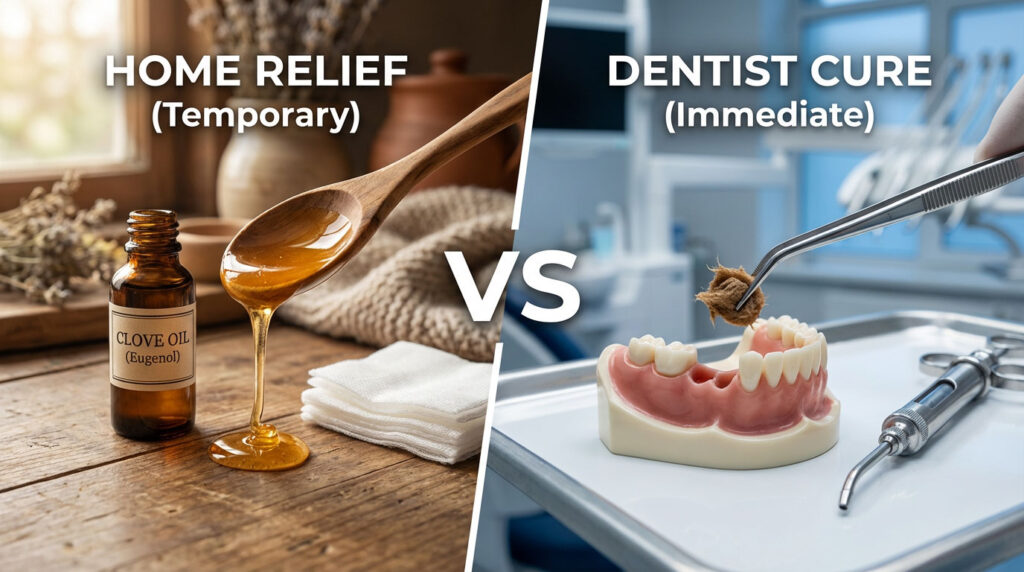
While the only true cure involves a professional medicated dressing placed by a licensed dentist, you cannot always get to the clinic immediately. You need a bridge. You need to know how to cure dry socket pain fast at home while you wait for your appointment.
This comprehensive guide serves as your pain triage manual. We will break down why standard numbing gels fail to touch this specific type of pain, provide a step-by-step safety protocol for using clove oil for dry socket, and detail exactly what the dentist will do to fix the problem permanently. We will explore the science behind dry socket medication, separate the myths from the medical realities, and guide you through the next 48 hours of your recovery.
Why Standard Toothache Gels and Benzocaine Are Ineffective for Dry Socket Nerve Pain
Before you rush to the pharmacy to buy every tube of gel on the shelf, you need to understand the anatomy of your pain. Dry socket treatment requires a fundamentally different approach than treating gum soreness, a burn from hot pizza, or a cavity. Understanding this distinction will save you money and frustration.
The Anatomy of Alveolar Bone Pain vs. Mucosal Gum Pain
Most over-the-counter dental products are designed for soft tissue. They work on gums, cheeks, and tongues. Dry socket self care is different because the source of the pain is the alveolar bone itself.
The pain signal travels through A-delta nerve fibers deep within the cortical bone of the jaw. Topical gels designed for teething babies or denture sores typically target the mucosa, the wet skin lining your mouth. These gels are chemically incapable of penetrating the dense cortical bone where the pain originates. This is why you can apply an entire tube of generic numbing gel and still feel the deep, rhythmic throbbing underneath. The medication is numbing the skin, but the bone remains screamingly alive.
The Washout Effect of Saliva on Topical Anesthetics
One of the most common questions patients ask is, “Can you use Orajel on dry socket?” The answer is complicated, but generally, it is ineffective for this specific condition.
Orajel and similar products rely on Benzocaine. This creates a numbing sensation on the surface. When you apply it to a dry socket, it might sting intensely for a moment, numb the gum rim for ten minutes, and then fade. The primary issue is the “washout effect.” Because the socket is a hole, saliva naturally pools inside it. Gels and liquids wash away almost instantly, diluted by your saliva before they can have any meaningful effect on the nerve endings.
Furthermore, relying on Benzocaine can create a false sense of security. While you keep reapplying it, the bone remains inflamed and exposed to bacteria, potentially extending your recovery time. You need a treatment that stays in place and chemically alters the pain signal, not just a surface number.
The Best Home Remedy: Using Clove Oil (Eugenol) for Dry Socket Relief
If you cannot get to a dentist immediately, the most effective dry socket medication available without a prescription is Eugenol. This is the active chemical compound found in clove oil. It has been used in dentistry for over a century and remains the gold standard for palliative care.
How Eugenol Acts as an Obtundent for Exposed Bone
Eugenol is classified in dentistry as an “obtundent.” This means it does more than just numb. It chemically sedates the nerve endings and creates a mild cauterizing effect on the exposed bone. It is the exact active ingredient used in the professional medicated dressing your dentist uses.
When applied correctly, clove oil for dry socket can turn a screaming 9/10 pain level down to a manageable 3/10 within fifteen minutes. It works by interfering with the transmission of pain signals and providing a localized antimicrobial environment. Unlike Benzocaine, which sits on top, Eugenol penetrates slightly into the porous bone structure, providing deeper and longer-lasting relief.
Using the Red Cross Toothache Medication Kit Safely
You do not necessarily need to buy essential oils from a health food store to get this relief. Most pharmacies like CVS, Walgreens, and Walmart carry a product specifically designed for this purpose, often labeled as “Red Cross Toothache Medication.”
This kit usually contains a small bottle of 85% Eugenol, small cotton pellets, and metal tweezers. Using this kit is often safer than buying raw essential oil because it is designed for oral use. However, even this kit requires caution. The concentration is high enough that if you spill it on your lips or tongue, it will burn. The benefit of the kit is the precision tools it provides, allowing you to place the medication exactly where it is needed without affecting the surrounding healthy tissue.
Step-by-Step Guide to Diluting Clove Oil to Prevent Chemical Burns
If you are using essential oil from a bottle found in a health food store or your kitchen cabinet, you must be extremely careful. Eugenol is potent. If you touch undiluted clove oil to your tongue or healthy gums, it will cause a chemical burn, leaving the tissue white and sloughing off. This is known as tissue necrosis.
The Safe Dilution Recipe:
- Select a Carrier Oil: Get a neutral oil like olive oil, coconut oil, or almond oil. Do not use water. Oil and water do not mix, and the clove oil will separate and burn you.
- The Correct Ratio: Mix 3 to 5 drops of clove oil with 1 teaspoon of carrier oil. This creates a solution that is strong enough to numb the bone but mild enough to avoid burning the soft gums.
- The Taste Test: Dip a cotton swab in the mix and touch it to the tip of your tongue. It should taste spicy and numb slightly, but it should not burn like fire. If it burns, add more carrier oil.
How to Apply Clove Oil to the Extraction Site Correctly
Once you have your diluted solution or your Red Cross kit, follow this protocol to apply it safely.
- Prepare the Gauze: Cut a tiny piece of sterile gauze. It should be small enough to fit loosely in the hole, about the size of a pea. Do not use a large cotton ball, as the fibers can get tangled in the healing tissue.
- Soak and Squeeze: Dip the gauze into your diluted eugenol mixture. Squeeze it out thoroughly on a paper towel. It should be damp, not dripping. A dripping gauze will leak oil onto your tongue and throat, which is very unpleasant.
- Insert Gently: Use clean tweezers to drop the gauze into the socket. Do not pack it tight. The goal is to drape the medication over the bone, not to apply pressure.
- Time Limit: Remove the gauze after 20 minutes. Leaving it in too long can irritate the tissue. The numbing effect should last for an hour or two after removal.
Natural Dry Socket Treatment Alternatives: Manuka Honey and Turmeric
For patients who are sensitive to strong chemicals, or for those who prefer a holistic approach, dry socket self care can include medical-grade honey. While less potent than Eugenol, it is a safer alternative with proven wound-healing benefits.
Scientific Evidence for Manuka Honey on Open Oral Wounds
Manuka honey for dry socket is gaining traction in clinical studies. Honey has high osmolarity, meaning it draws fluid out of the wound tissues. This action significantly reduces swelling (edema) around the socket.
Furthermore, Manuka honey has a low pH and produces hydrogen peroxide, which creates an antibacterial environment.
- The Grade Matters: You cannot use the plastic bear honey from the grocery store. You must use Medical Grade Manuka Honey with a UMF (Unique Manuka Factor) rating of 10+ or higher.
- The Application Protocol: Coat a sterile strip of gauze in the honey and place it gently over the socket. It acts as a barrier, kills bacteria, and soothes inflammation without the risk of chemical burns associated with clove oil.
Why Vanilla Extract and Whiskey Are Dangerous Home Remedies
The internet is full of bad advice on how to treat dry socket at home. Avoiding these myths saves you pain and prevents further damage.
- Vanilla Extract Risks: People suggest this because it contains a high percentage of alcohol. While the alcohol might numb the area for thirty seconds, it burns the raw tissue and delays healing. The relief is fleeting, but the tissue damage can be lasting.
- Whiskey and Alcohol: Swishing with whiskey or vodka causes severe dehydration of the oral mucosa. It kills the good cells (fibroblasts) trying to heal the wound. It provides only a momentary distraction from the pain and can interact negatively with any pain medication you have already taken.
- Salt Water Limits: While salt water cleans the wound, it does not stop the pain. It is a hygiene measure, not a painkiller. Do not expect a salt water rinse to fix a dry socket.
Over-the-Counter Pain Medication Strategies for Severe Dental Pain
While topical treatments help, systemic pain management is crucial. Many patients find that taking just one type of pill is not enough to combat the intense nerve signals of a dry socket.
The “2-4-2” Protocol: Stacking Ibuprofen and Acetaminophen
The “2-4-2” or alternating method is often recommended by oral surgeons for managing severe dental pain without narcotics. This strategy attacks the pain from two different biological angles.
- The Science: Ibuprofen for dry socket (Advil, Motrin) targets the inflammation causing the pressure. It creates a chemical blockade against prostaglandins. Acetaminophen (Tylenol) acts as an analgesic, blocking the pain signals in the brain itself.
- The Protocol: Consult your doctor first to ensure your liver and kidneys are healthy enough for this regimen. A common schedule for adults is to take 600mg of Ibuprofen, wait three hours, take 500mg of Acetaminophen, wait three hours, and repeat. This ensures you always have peak levels of pain relief in your system without overdosing on either medication.
Why Antibiotics Do Not Cure Dry Socket Pain
A common misconception leads patients to beg their dentists for antibiotics. Do antibiotics help cure dry socket? Generally, no.
Dry socket is a localized inflammatory condition, not necessarily a spreading infection. Antibiotics kill systemic bacteria, but they do not stop the pain of exposed bone. They are rarely prescribed for dry socket unless you also have a fever, swollen lymph nodes, or spreading facial swelling. Taking antibiotics unnecessarily can lead to resistance and stomach issues without solving your immediate pain problem.
Professional Dry Socket Treatment: What Does the Dentist Do?
It is important to understand that home remedies are palliative; they mask the pain temporarily. The dentist offers the only true treatment that addresses the exposure and speeds up the comfort levels.
The Alvogyl Paste Solution: Ingredients and Effects
When you sit in the dental chair, the relief is usually almost instantaneous. The dentist uses a professional medicated dressing, often a product called Alvogyl (or a generic equivalent). This is the “magic paste” patients rave about online.
- Eugenol: A high concentration to stop the pain immediately via chemical sedation.
- Butamben: A long-acting local anesthetic that keeps the area numb for hours or days.
- Iodoform: A strong antimicrobial agent that kills bacteria and prevents infection in the socket.
- The Texture: It looks like a fibrous, brown fern or dry tobacco. It smells strongly of cloves and medicine.
The Professional Irrigation and Debridement Procedure
The treatment appointment is usually quick and does not require a shot (needle) in most cases.
- Irrigation: The dentist will numb you slightly using a topical gel and then flush the socket with saline or chlorhexidine using a curved syringe. This removes the rotting food debris and bacteria that are causing the pain and bad smell.
- Packing: They will gently place the dry socket paste into the hole. They do not pack it tightly; they drape it to cover the bone.
- The Relief: Most patients report that the throbbing stops within 5 to 7 minutes. It is often described as “someone turning off a switch.”
- Self-Eliminating: One of the best features of professional Alvogyl is that it is often self-eliminating. The fibers dissolve or fall out naturally as your gum heals from the bottom up, meaning you do not always have to go back to have it removed.
Is Dry Socket Paste Available Over the Counter at CVS or Walgreens?
Patients often search for “dry socket paste over the counter” expecting to buy Alvogyl at CVS. The reality is that you cannot. Professional pastes contain ingredients that require a dental license to dispense. The “pastes” sold in stores are usually weak benzocaine gels or temporary filling materials that are not suitable for an open extraction wound. Do not put temporary filling material (for lost fillings) into a dry socket; it can become impacted and cause a severe infection.
Comparison Table: Orajel vs. Clove Oil Effectiveness
| Feature | Orajel (Benzocaine) | Clove Oil (Eugenol) |
| Target Area | Surface Gums (Mucosa). | Deep Bone & Nerve. |
| Duration of Relief | 10–20 Minutes. | 1–2 Hours. |
| Mechanism | Blocks sodium channels (numbing). | Obtundent (Sedative effect on bone). |
| Main Risk | Methemoglobinemia (rare). | Chemical Burn (if undiluted). |
| Verdict | Avoid for Dry Socket. | Recommended (Diluted). |
Risks of DIY Packing and How to Pack a Dry Socket Safely
We see significant search volume for “how to pack a dry socket.” This indicates patients are trying to replicate the dentist’s work at home. This is risky but sometimes necessary in extreme circumstances, such as being unable to reach a dentist for days.
Dangers of Using Cotton Balls vs. Sterile Gauze
If you are stranded and in agony, and the liquid clove oil isn’t lasting long enough, you might attempt to place a medicated gauze.
- Sterile Supplies Only: Never use a cotton ball or a Q-tip tip. The cotton fibers can shred and get stuck in the granulation tissue. This foreign material acts as a scaffolding for bacteria, causing a massive secondary infection.
- Woven Gauze: Use only sterile woven gauze cut into tiny strips. The weave prevents it from falling apart inside the wound.
Emergency Protocol for Packing a Socket at Home
If you must do this, follow strict hygiene protocols.
- The Technique: Use sterilized tweezers (boil them or wipe with alcohol). Dip the gauze in your eugenol mixture. Squeeze it dry. Gently drape it into the opening.
- The Warning: Do not jam the packing deep into the hole. If you hit the exposed bone too hard, you will experience blinding pain. The goal is to cover the bone, not fill the hole tightly like a cork.
- Removal: You must remove this home packing within 24 hours. Unlike the professional paste, cotton gauze will become a breeding ground for bacteria if left in too long.
Cost of Treatment and Insurance Coverage for Dry Socket
For many, the barrier to treatment is the fear of cost. However, treating dry socket is often cheaper than suffering through it.
Emergency Dentist Costs vs. Urgent Care Limitations
- Emergency Visit: Most dentists charge for a limited exam (focused on the problem area) and an emergency palliative care visit. Without insurance, an emergency dental visit for dry socket typically ranges from $100 to $200. This includes the exam, irrigation, and the medicated dressing.
- Insurance Coverage: Does insurance cover dry socket treatment? Yes, most dental insurance plans cover this procedure fully or partially as a post-operative complication.
- Urgent Care Viability: Medical urgent care clinics can prescribe stronger painkillers or antibiotics, but they rarely have the dental instruments or medicated dressing to treat the socket locally. They cannot pack the socket. Your best bet is always a dentist, even if it costs slightly more upfront.
Lifestyle Adjustments to Speed Up Dry Socket Recovery
While treating the pain, you must also support your body’s ability to heal the wound.
Foods to Eat While Treating Dry Socket Pain
Nutrition is difficult when your mouth hurts, but your body needs calories to build tissue.
- Cold and Soft: Stick to cold, soft foods. Cold reduces inflammation. Ice cream, yogurt, and cool apple sauce are ideal.
- Avoid Acid: Avoid orange juice or tomato soup. The acid will sting the raw bone.
- Protein: Scrambled eggs and lukewarm protein shakes help repair the tissue.
Sleep Positions to Reduce Jaw Throbbing at Night
Pain is often worse at night because lying flat increases blood pressure in the head.
- Elevation: Sleep with your head elevated on two or three pillows. Keeping your head above your heart uses gravity to drain fluid from the face, reducing the hydrostatic pressure inside the socket.
- Side Sleeping: Avoid sleeping on the side of the extraction. The pressure of the pillow against the jaw can trigger the pain.
Comparison Table: Home Remedy vs. Professional Treatment
| Feature | Home Remedy (Clove Oil) | Professional Tx (Alvogyl) |
| Pain Relief Speed | 10-15 Minutes. | Immediate (5 mins). |
| Duration | Requires re-application every 2 hrs. | Lasts 24–48 Hours. |
| Healing Effect | Palliative only (masks pain). | Antimicrobial (aids healing). |
| Cost | Low ($10-$15). | Moderate ($100-$200 w/o insurance). |
| Safety | Risk of user error/burns. | 100% Safe (Professional). |
Summary and Key Takeaways
Dry socket treatment is about bridging the gap between agony and healing. While home remedies can help you sleep through the night, they are temporary fixes.
- Avoid the Gel: Don’t waste time with Orajel; it won’t touch bone pain.
- Embrace the Clove: Clove oil for dry socket is the most effective tool you have at home. Use it wisely and safely.
- Stack the Meds: Use the Ibuprofen and Tylenol combination to attack pain from two angles.
- Seek the Cure: Call your dentist. The 5 minutes it takes to pack the socket with Alvogyl provides more relief than 5 days of home struggle.
If you have been suffering for more than 24 hours and home remedies are barely touching the pain, stop waiting. The relief available in the dental chair is worth the trip.
Frequently Asked Questions (FAQ)
Can I put Orajel inside the extraction hole?
You can physically put it there, but it is not recommended. It often stings intensely upon initial contact with the raw bone and provides very little relief because it cannot penetrate the bone tissue. It also washes away instantly with saliva.
What acts as the best natural remedy for dry socket pain?
Clove Oil (Eugenol) is the most effective natural remedy because it has specific anesthetic properties for bone. Manuka Honey is a strong second for soothing inflammation and reducing bacterial load.
What does the dentist put in the socket to stop the pain?
The dentist puts a medicated dressing or paste into the socket. The most common brand is Alvogyl. It contains eugenol to numb the pain, a local anesthetic for duration, and iodoform to kill bacteria.
Do antibiotics help cure dry socket?
No. Dry socket is a localized inflammatory condition, not a spreading infection. Antibiotics kill systemic bacteria but do not stop the pain of exposed bone. They are rarely prescribed unless you also have a fever or significant facial swelling.
How often should I change the dry socket dressing?
If you are using a home clove oil gauze, you should change it every 20 minutes and then remove it to prevent gum irritation. If you have a professional medicated dressing from the dentist, leave it alone. It typically stays in place for 2 to 3 days before dissolving or falling out on its own.
How much does dry socket treatment cost?
Without insurance, an emergency dental visit for dry socket typically ranges from $100 to $200. This includes the exam, irrigation, and the medicated dressing. Most dental insurance plans cover this procedure fully or partially as a post-operative complication.
Can dry socket heal without packing?
Yes, it can heal without packing, but it will be extremely painful. The packing is primarily for pain management. The body will eventually cover the exposed bone with granulation tissue in 7 to 10 days regardless of whether it is packed, but those 10 days will be miserable without treatment.
Disclaimer: The information provided in this article is for educational purposes only and does not constitute medical advice. Home remedies are for temporary relief. If you are experiencing severe pain, consult your dentist or oral surgeon immediately for professional treatment.
References:
- Journal of the American Dental Association (JADA). “Management of Alveolar Osteitis.”
- Cochrane Database of Systematic Reviews. “Local interventions for the prevention of alveolar osteitis (dry socket).”
- International Journal of Dentistry. “Efficacy of Manuka Honey in Wound Healing.”
- Septodont. “Alvogyl: Product Composition and Usage.”