

I sat in the consultation chair, palms sweating, realizing I had absolutely no idea what I was signing up for. The gap in my smile was humiliating, but the thought of drilling into my jawbone felt like a pure nightmare.
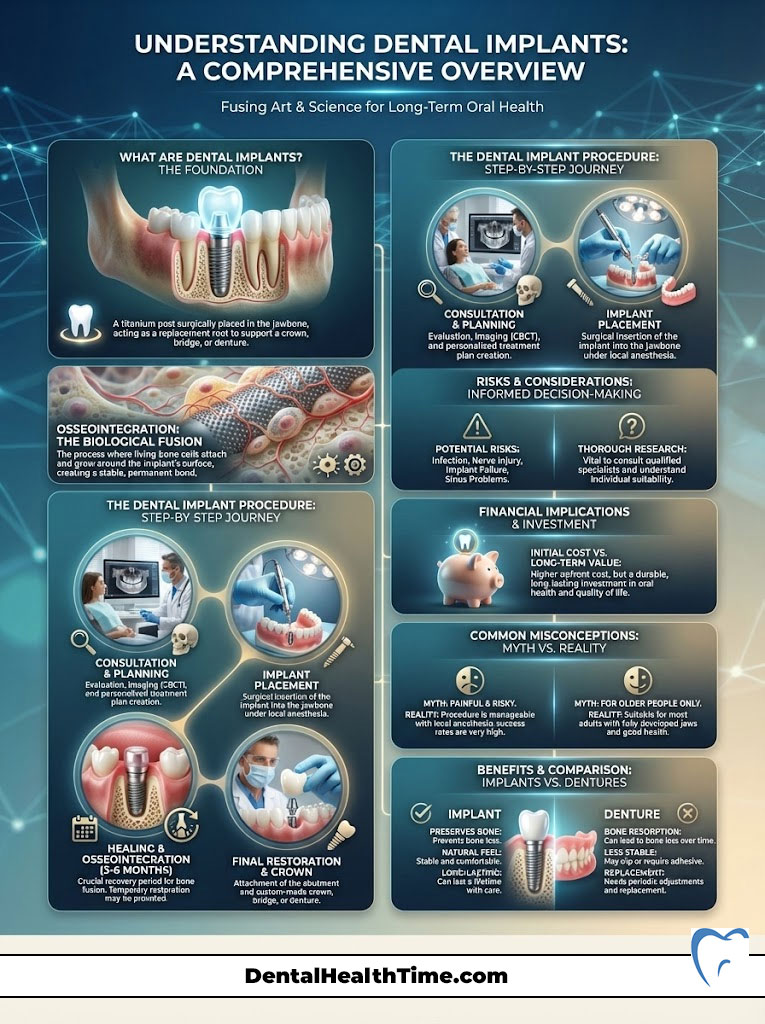
Most people think getting a new tooth is as simple as buying a spare part for a car, but I learned the hard way that it is far more complex. If you rush this decision without understanding the biology involved, you could be facing years of regret and financial drain.
I dug deep into the science to find out if this procedure is actually safe. What I discovered about how these metal posts fuse with your body changes everything you think you know about dentistry.
The Hidden Architecture Beneath Your Gums
When I first looked at the diagrams, I assumed an implant was just a fake tooth. I was dead wrong. It is actually a three-part engineering marvel that mimics nature in a slightly terrifying way.
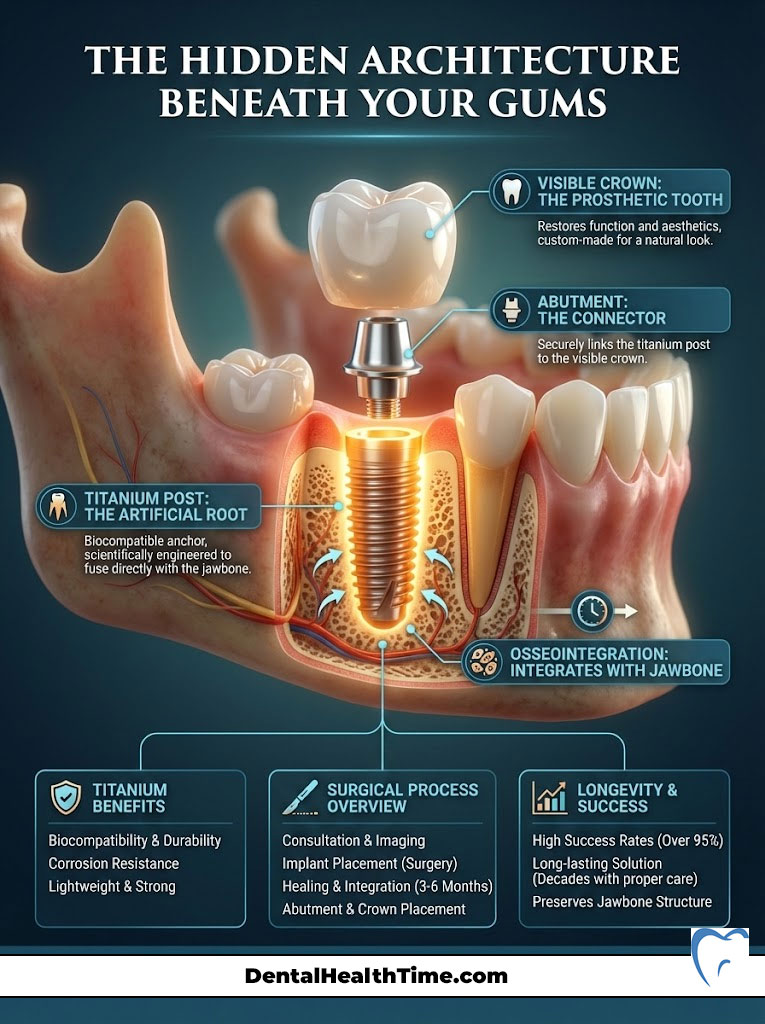
The anchor is not the white part you see when you smile. It is a titanium post that acts as an artificial root, buried deep within your jawbone. I found it fascinating that surgeons use titanium because your body rarely rejects it.
The Three Critical Components
- The Implant Body: The screw that fuses with your living bone.
- The Abutment: The connector piece that sits just above the gum line.
- The Crown: The visible ceramic tooth that restores your smile.
Why The Waiting Game Is Essential
My biggest misconception was thinking I would walk out with a perfect smile in one day. While “teeth in a day” marketing exists, I discovered that true stability takes time. The process relies on a biological phenomenon called osseointegration.
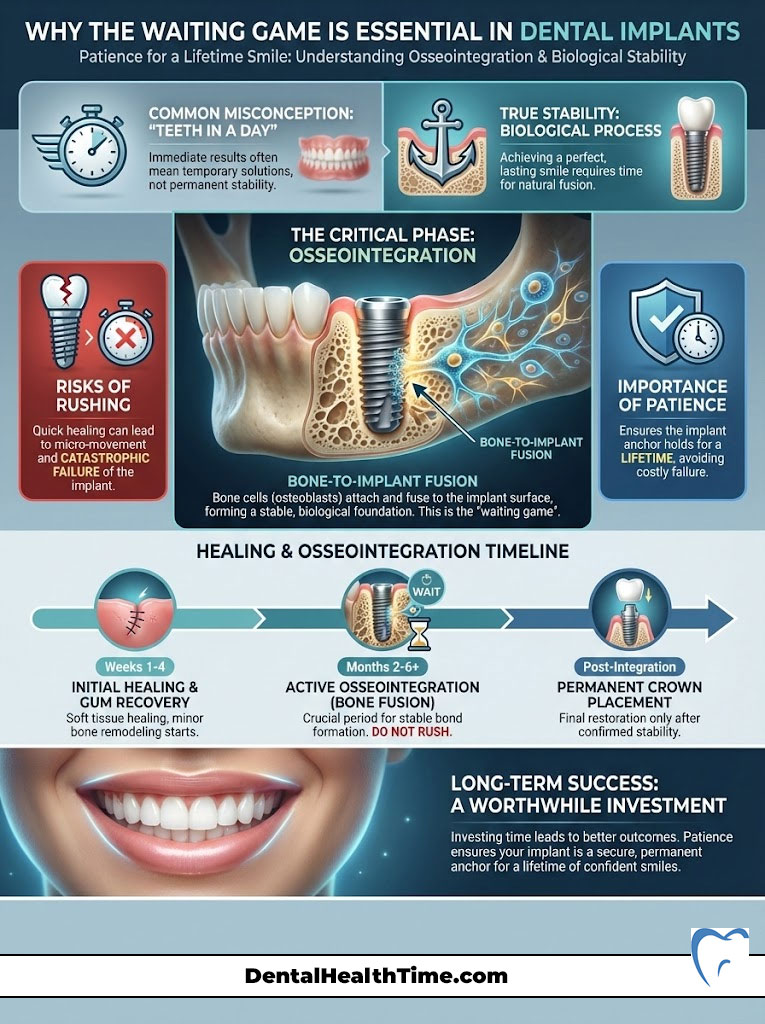
This is where your bone cells actually attach themselves to the metal surface of the implant. If you rush this phase, the entire structure can fail catastrophically. I learned that patience is the only way to ensure the anchor holds for a lifetime.
Rushing the healing process is the number one mistake patients make.
The Financial Reality Check
I nearly choked when I saw the initial price tag. However, once I broke down the long-term costs of alternatives, the picture changed completely. Bridges damage healthy adjacent teeth, and dentures lead to bone loss over time.
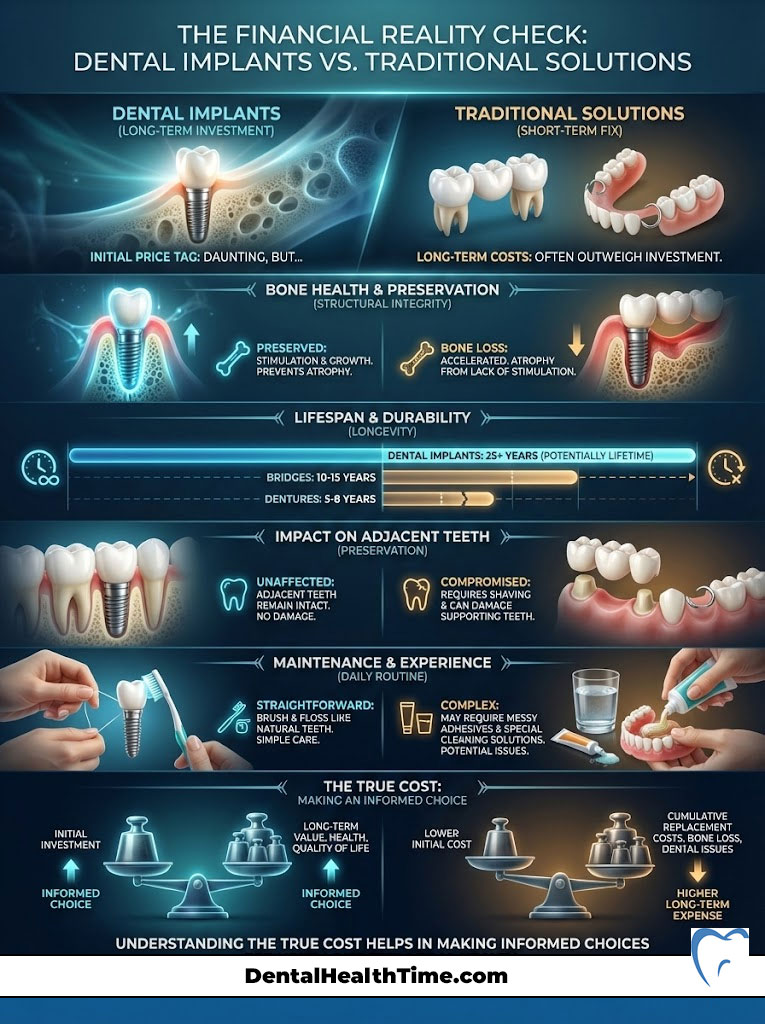
I realized that while the upfront cost is steep, the maintenance cost is surprisingly low. You treat them like real teeth—brushing and flossing—rather than dealing with messy adhesives.
Implant vs. Traditional Solutions
| Feature | Dental Implants | Traditional Bridge | Removable Dentures |
|---|---|---|---|
| Bone Health | Preserves bone | Causes bone loss | Accelerates bone loss |
| Lifespan | 25+ Years (Lifetime) | 10-15 Years | 5-8 Years |
| Impact on Teeth | None | Grinds down neighbors | Hooks wear down enamel |
| Stability | 100% Secure | Moderate | Can slip/move |
The Risks Nobody Talks About
It would be irresponsible of me not to mention the anxiety-inducing risks. Infection is a real possibility if your oral hygiene slips even a little bit. I found reports of “peri-implantitis,” a condition where the gum gets inflamed around the screw.
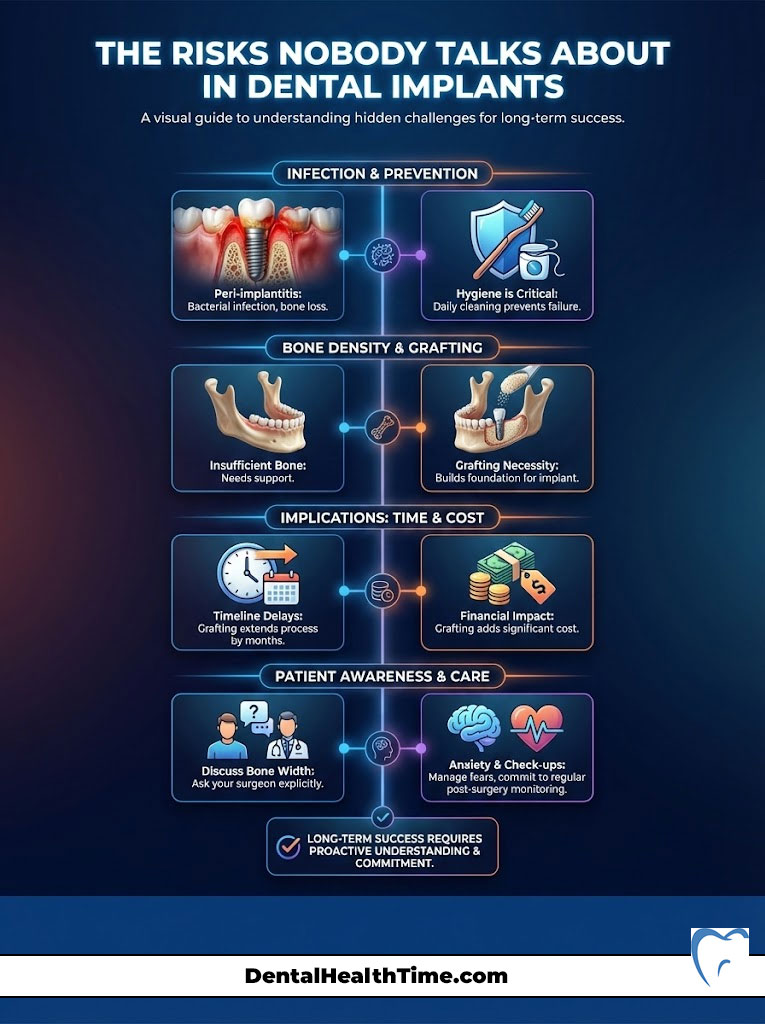
Furthermore, if you lack sufficient bone density, you might need a graft before you can even start. This adds months to the timeline and dollars to the bill. I had to ask my surgeon specifically about my bone width to sleep at night.
Who Should Be Worried?
- Heavy smokers (healing is significantly slower).
- People with uncontrolled diabetes.
- Patients with severe gum disease history.
My Final Verdict on The Procedure
After sifting through the data and calming my own nerves, I view dental implants differently now. They are not just cosmetic; they are a vital health intervention. Losing a tooth causes your jawbone to shrink, which ages your face prematurely.
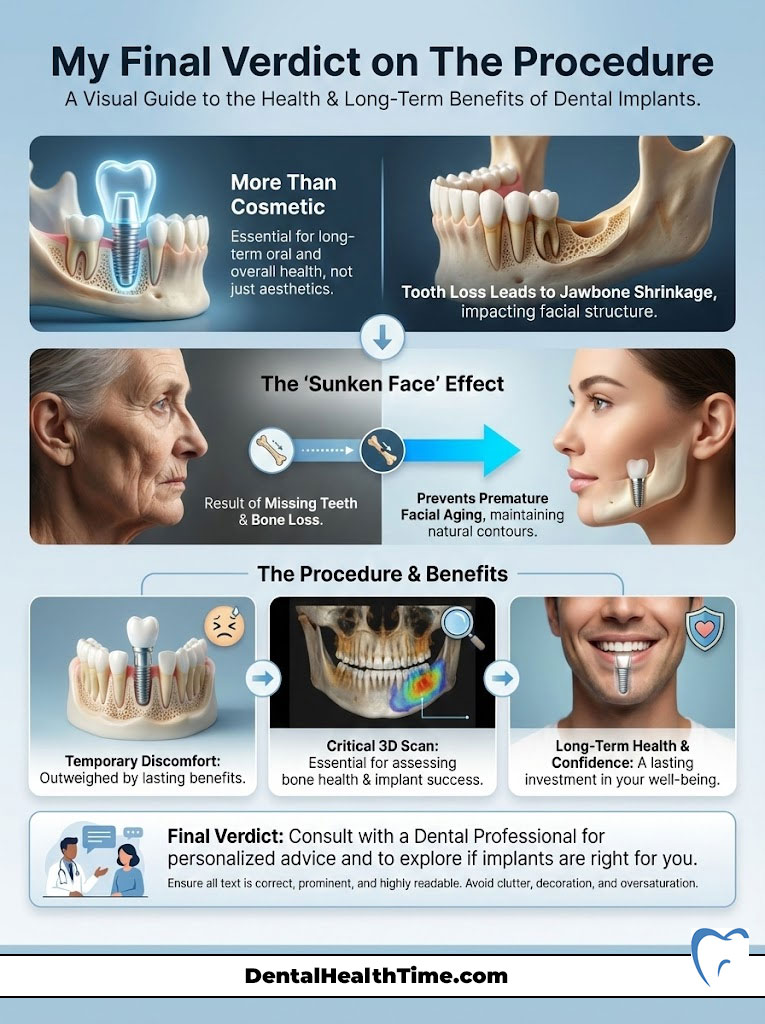
I decided that the temporary discomfort is worth avoiding the “sunken face” look later in life. If you are on the fence, get a 3D scan immediately. Knowing your bone status is the only way to know if this genius solution will work for you.