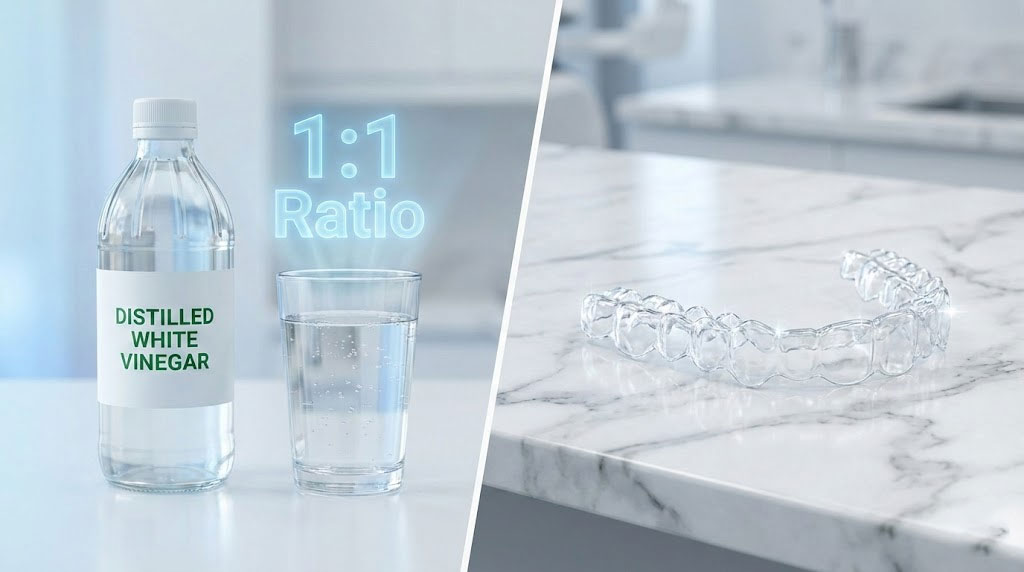

Yes, you can safely clean a retainer with vinegar if done correctly. Dental experts recommend a weekly soak using a 1:1 mixture of distilled white vinegar and lukewarm water for 15 to 30 minutes. This method effectively dissolves calcium deposits and kills bacteria without damaging the plastic, provided you rinse thoroughly afterward to remove acid residue.
Table of Contents
The Reality of Retainer Hygiene
You wake up, take your retainer out, and give it a quick rinse under the tap. It looks clean enough. You throw it in the case and go about your day. But over time, you notice a subtle shift. Maybe the plastic isn’t as crystal clear as it used to be. Perhaps there is a faint, stale odor that toothpaste just won’t cover. Or worse, you feel small, rough patches of white buildup forming in the crevices of the tray.
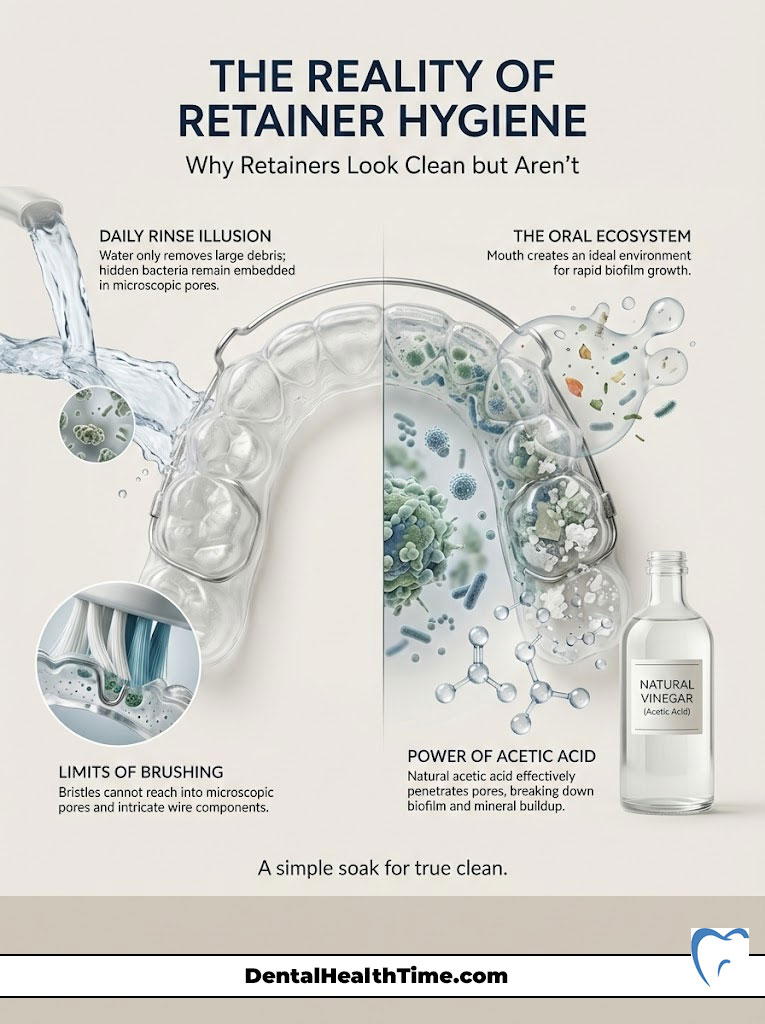
This is the reality for millions of orthodontic patients. The mouth is a complex ecosystem of bacteria, saliva, and food particles. When you introduce a retainer, you create a perfect shelter for biofilm to thrive. While brushing is essential, it often fails to penetrate the microscopic pores of the plastic or the tight solder points of a wire appliance.
Commercial cleaning tablets are a popular option, but they can be expensive and full of unpronounceable chemicals. This leads many savvy patients to look for a safe retainer cleaning solution that is effective, natural, and already in their pantry.
We are talking about vinegar. Specifically, the power of acetic acid to cut through the toughest oral buildup.
In this comprehensive guide, we will explore how to clean retainers naturally using vinegar. We will break down the chemistry, the exact protocol to ensure safety, and the critical mistakes you must avoid to keep your appliance in pristine condition.
Understanding the Chemistry: Why Vinegar Retainer Cleaning Works
To understand why vinegar retainer cleaning is so effective, we first need to understand the enemy. The white, chalky buildup on your retainer is called calculus, or tartar. It is essentially calcified plaque.
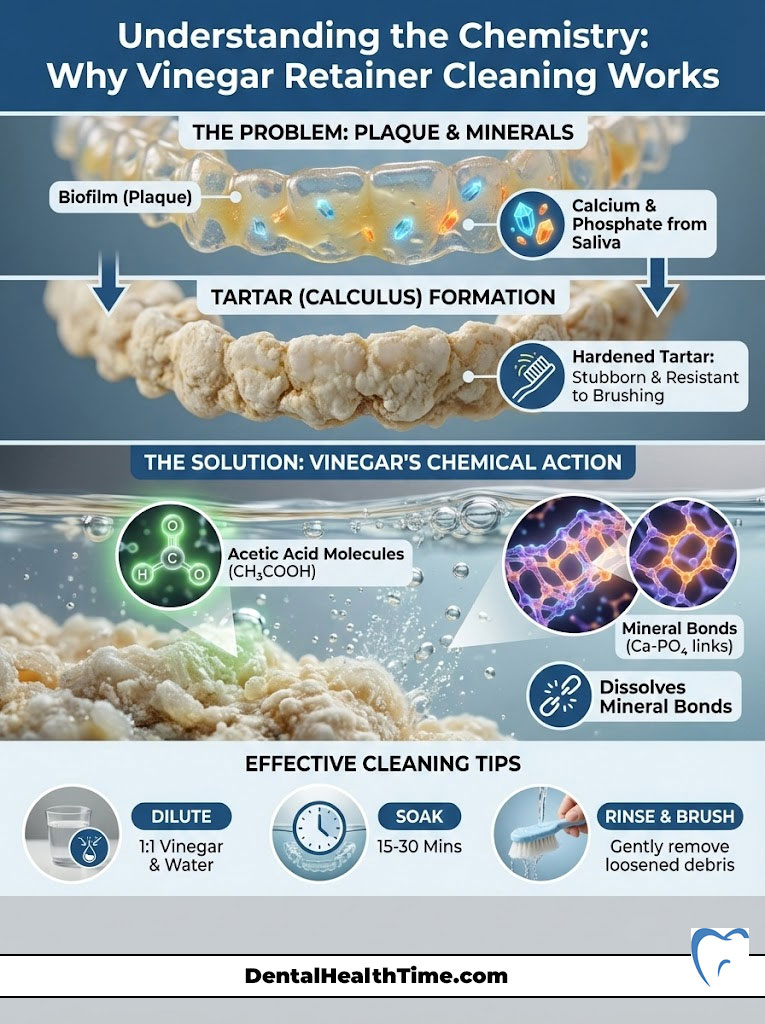
Plaque is a sticky film of bacteria. When plaque is left on the retainer, it interacts with the minerals in your saliva (specifically calcium and phosphate) and hardens into tartar. Tartar is incredibly stubborn. A toothbrush often just slides right over it. You need a chemical agent to dissolve the mineral bonds.
The Role of Acetic Acid
This is where vinegar shines. Distilled white vinegar is roughly 5% acetic acid and 95% water. Chemically, tartar is alkaline (base). When you introduce an acid to a base, a neutralization reaction occurs. The acetic acid in the vinegar reacts with the calcium carbonate in the tartar, effectively breaking it down into a soluble form that can be easily brushed away.
Research supports the antimicrobial power of this household staple. Vinegar retainer cleaning does more than just remove minerals. It creates an environment where common oral bacteria like Streptococcus mutans and fungal infections like Candida albicans struggle to survive.
Is It Safe? The pH Factor
The safety of using a vinegar soak for retainers comes down to pH balance and exposure time. Vinegar has a pH of around 2.5, which is quite acidic.
If you were to leave a plastic retainer in undiluted vinegar for days, the acid could eventually soften the polymer structure or corrode metal solder points. However, when you dilute the vinegar with water and limit the soak time, you harness the cleaning power without risking the structural integrity of the appliance.
This balance is what makes vinegar a safe retainer cleaning solution when used responsibly. It is strong enough to dissolve tartar but gentle enough for weekly maintenance.
Step-by-Step Guide: How to Clean Retainers Naturally
Knowing that vinegar works is only half the battle. You must know the exact method to avoid damaging your expensive appliance. Follow this dentist-approved protocol to clean retainer with vinegar safely.
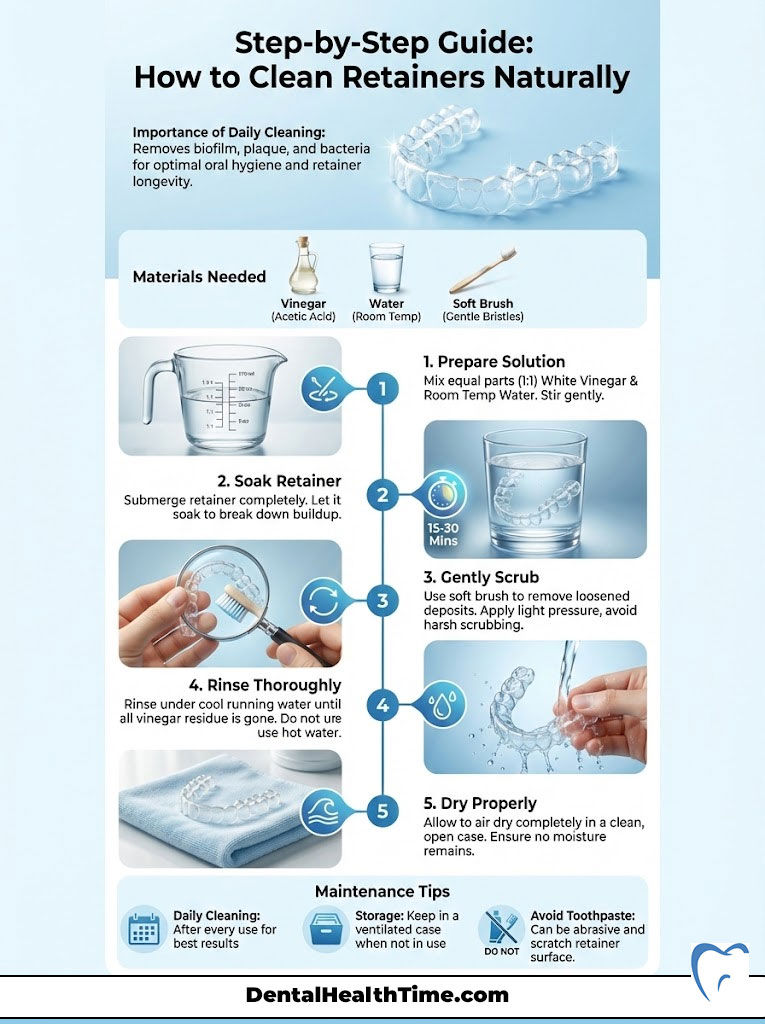
Step 1: Preparation and Supplies
Do not use just any vinegar you find in the cupboard. You specifically want distilled white vinegar. Avoid apple cider vinegar (ACV) or balsamic vinegar for this process, as they contain tannins that can stain clear plastics (more on that later).
You will need:
- Distilled white vinegar (5% acidity).
- A clean glass or ceramic cup (avoid reactive metal bowls).
- Lukewarm water (never hot).
- A soft-bristled toothbrush reserved only for your retainer.
Step 2: The Perfect Vinegar Solution Ratio
The ideal vinegar solution ratio is 1:1. This means you should mix equal parts vinegar and water.
For a standard retainer case or cup, this usually looks like:
- Half a cup of distilled white vinegar.
- Half a cup of lukewarm water.
There is a misconception that “more is better.” Do not use undiluted vinegar. The 1:1 ratio provides enough acidity to dissolve buildup while acting as a buffer to protect the plastic.
Step 3: The Soak Time
Submerge your retainer fully in the solution. Now, set a timer.
How long should retainers soak in vinegar? The sweet spot is 15 to 30 minutes.
- Under 15 minutes: The acid may not have enough time to penetrate thick tartar deposits.
- Over 30 minutes: You risk softening the plastic surface, which can actually make the retainer more porous and prone to future staining.
Critical Warning: Do not soak your retainer in vinegar overnight. Extended exposure to acid is one of the most common ways users accidentally degrade their appliances.
Step 4: Mechanical Cleaning
After the 30-minute soak, take the retainer out. It might still look a bit cloudy. This is normal. The tartar has been softened, but it still needs to be physically removed.
Take your soft-bristled toothbrush and gently scrub every surface of the retainer. Pay special attention to the deep crevices where saliva pools. You will notice the white buildup flaking off much easier than it would with water alone.
Step 5: The Rinse
Rinsing is arguably the most important step for your comfort. Rinse the retainer thoroughly under cool or lukewarm running water for at least 30 to 60 seconds. You want to ensure every trace of acetic acid is washed away.
If you skip this step, you will be left with a sour taste in your mouth, and the lingering acid could potentially irritate your gums or erode your tooth enamel when you put the retainer back in.
Material Compatibility: Is Vinegar Safe for YOUR Specific Retainer?
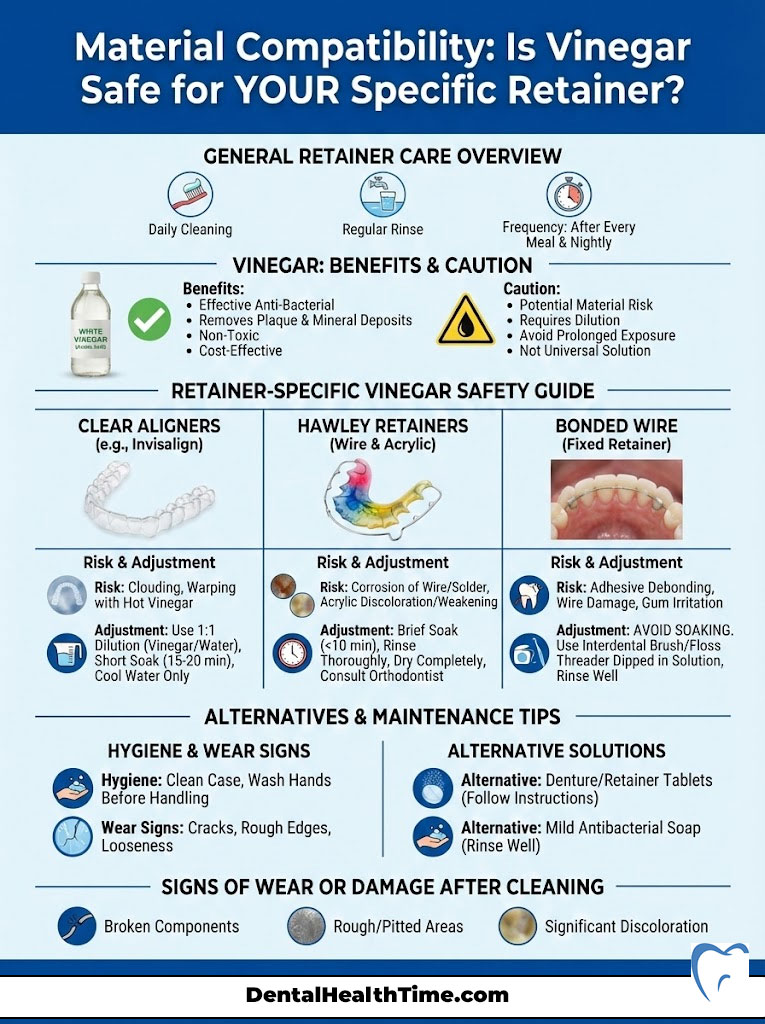
Not all retainers are created equal. The way you clean retainer with vinegar might need slight adjustments depending on whether you wear a clear aligner, a wire Hawley retainer, or a bonded wire.
Clear Plastic Retainers (Essix, Vivera, Invisalign)
Clear retainers are made from thermoplastic materials like polyurethane or copolyester. They are aesthetically pleasing because they are invisible, but they are also prone to clouding.
Vinegar is a safe retainer cleaning solution for these types, but you must be strict about the time limit. If you leave a clear retainer in vinegar for hours, the acid can etch the surface. This creates a microscopic frostiness or cloudiness that you cannot scrub off.
Stick to the 20-minute mark for clear trays to maintain their transparency.
Wire and Acrylic Retainers (Hawley)
Hawley retainers feature a hard acrylic plate that sits against the roof of your mouth and a metal wire that wraps around the teeth.
The acrylic is robust and handles vinegar retainer cleaning very well. However, the metal wire contains solder joints. While stainless steel is resistant to rust, the solder can be vulnerable to corrosion if exposed to acid frequently.
For Hawley retainers, ensure the vinegar solution ratio is strictly 1:1 and rinse very well to prevent the metal from tarnishing or developing a metallic taste.
Permanent (Bonded) Retainers
A bonded retainer is a wire glued to the back of your teeth. You obviously cannot remove this to soak it.
Can you clean a bonded retainer with vinegar? No. Do not swish vinegar in your mouth to clean a bonded retainer. The acid is too harsh for your teeth and gums. It can lead to enamel erosion and sensitivity.
For bonded retainers, rely on floss threaders and professional dental cleanings to remove tartar.
Vinegar vs. Commercial Cleaners vs. Other Natural Methods
When deciding how to clean retainers naturally, it helps to compare vinegar against the other options on the market. Is vinegar truly the best choice, or is it just the cheapest?
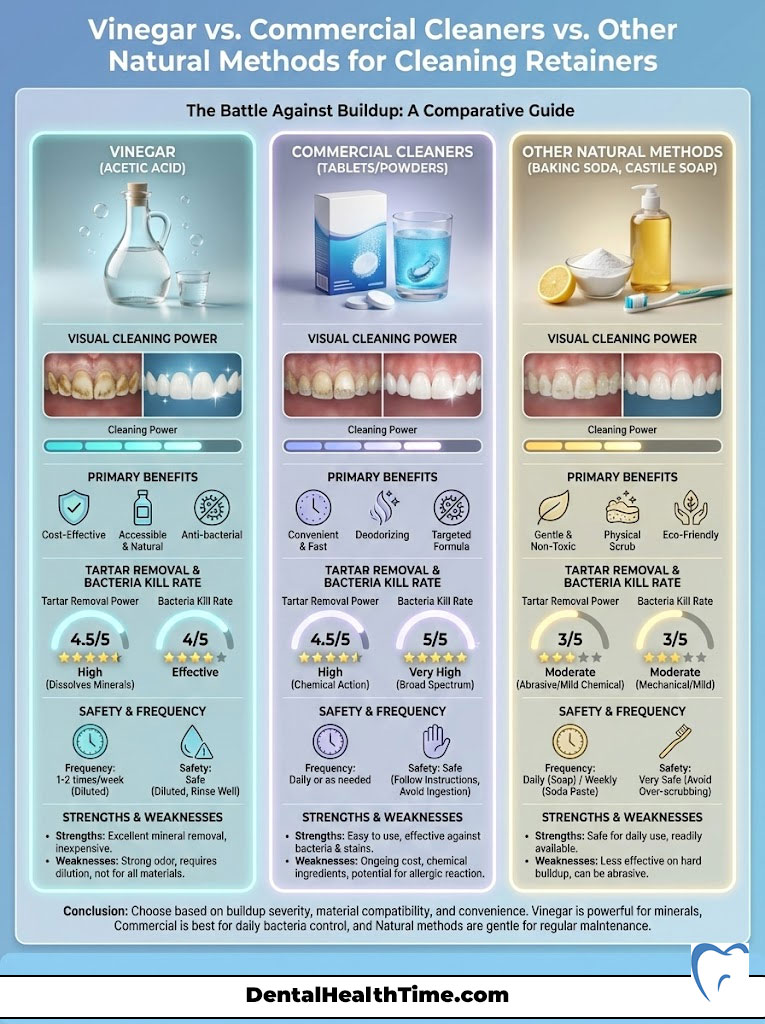
The following table compares distilled white vinegar against popular alternatives like Retainer Brite, Hydrogen Peroxide, and generic mouthwash.
| Cleaning Solution | Primary Benefit | Tartar Removal Power | Bacteria Kill Rate | Safety Profile | Recommended Frequency |
| Distilled White Vinegar | Dissolves mineral buildup (tartar) | High (Best Option) | Moderate to High | High (when diluted) | Weekly |
| Retainer Brite (Tablets) | Taste and convenience | Low to Moderate | High | High | Daily or Weekly |
| Hydrogen Peroxide | Whitening and disinfecting | Low | High | Moderate (Can degrade plastic) | Occasional |
| Mouthwash | Scent/Flavor | None | Low | Low (Alcohol damages plastic) | Never |
| Baking Soda Paste | Odor removal and scrubbing | Moderate (Abrasive) | Low | High | As needed for odors |
The Verdict on Alternatives
Vinegar vs. Tablets:
Cleaning tablets are excellent for killing bacteria and leaving a minty fresh scent, but they often struggle with hard calcified deposits. If your main issue is white crusty spots, clean retainer with vinegar. If your main issue is just daily hygiene, tablets are a convenient luxury.
Vinegar vs. Hydrogen Peroxide:
Peroxide is a powerful disinfectant, but it creates free radicals that can break down plastic polymers over time. It serves a different purpose than vinegar. Vinegar removes the physical buildup; peroxide kills the biological germs. Vinegar is generally safer for the long-term structural integrity of the appliance.
Why You Should Never Use Mouthwash:
It is tempting to soak your retainer in mouthwash to make it smell good. Do not do this. Most mouthwashes contain alcohol. Alcohol acts as a solvent that dries out the acrylic of Hawley retainers and the plastic of clear aligners. This leads to brittleness and cracking. Furthermore, the dyes in mouthwash (blue or green) will permanently stain clear retainers.
Troubleshooting: Smell, Taste, and Stains
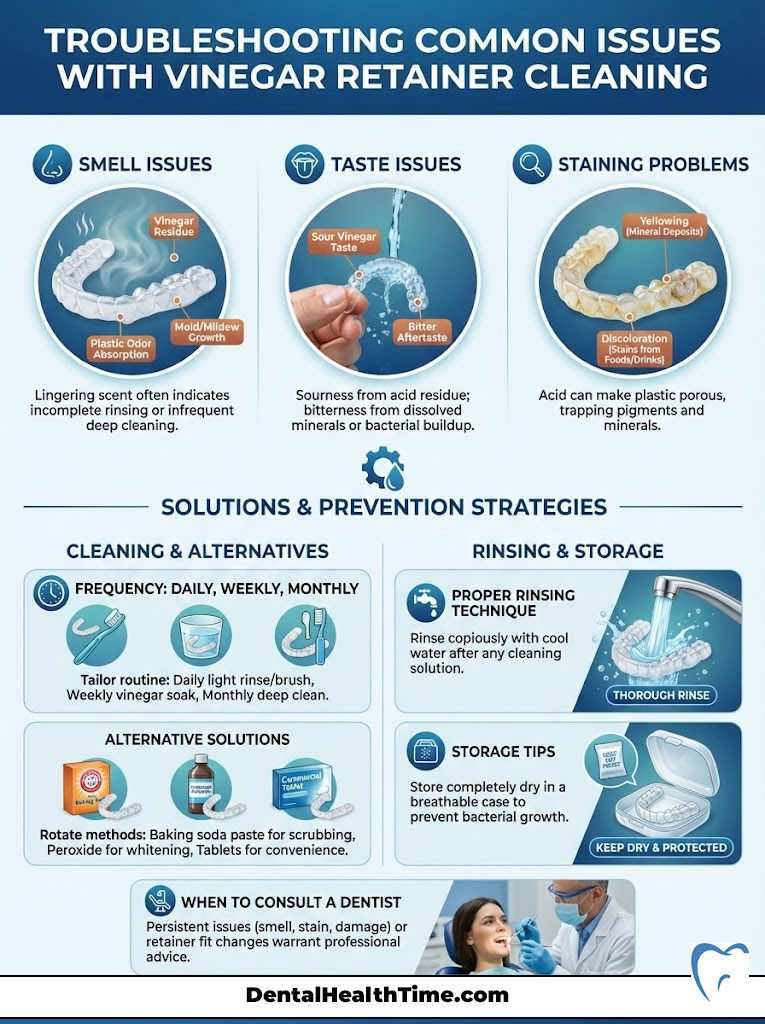
Even with a safe retainer cleaning solution, users sometimes run into issues. Here is how to troubleshoot the most common problems associated with vinegar retainer cleaning.
“My Retainer Smells Like Vinegar”
This is the most common complaint. If you do not rinse well enough, that sharp acetic smell lingers.
The Fix: The Baking Soda Chaser.
After your vinegar soak and rinse, create a separate bowl of water with a teaspoon of baking soda dissolved in it. Dip your retainer in this alkaline solution for 2-3 minutes. The baking soda neutralizes any remaining acid and eliminates the odor efficiently.
“My Retainer Still Has White Spots”
If you clean retainer with vinegar and still see white spots, you likely have very old, hardened calculus.
The Fix: You may need a longer soak (up to 45 minutes) followed by a more vigorous scrub. If that fails, consider investing in an ultrasonic cleaner. You can use the ultrasonic cleaner with the vinegar solution. The vibration helps the acid penetrate the calcified layers deeper than a static soak can.
“My Retainer Turned Yellow”
This usually happens for one of two reasons: smoking while wearing the retainer (which stains the plastic deep down) or using the wrong type of vinegar.
The Fix: Check your vinegar. Did you use Apple Cider Vinegar?
The Apple Cider Vinegar (ACV) Warning
Many users ask: Can I use apple cider vinegar to clean my retainer?
Technically, yes, ACV is antimicrobial. However, ACV is dark in color and contains natural tannins from apples. Clear plastic retainers are porous. Over time, they will absorb these tannins, leading to a permanent yellow or brownish tint.
For the sake of aesthetics, always stick to distilled white vinegar. It is clear, colorless, and just as effective at cleaning.
Frequency and Routine: Best Practices
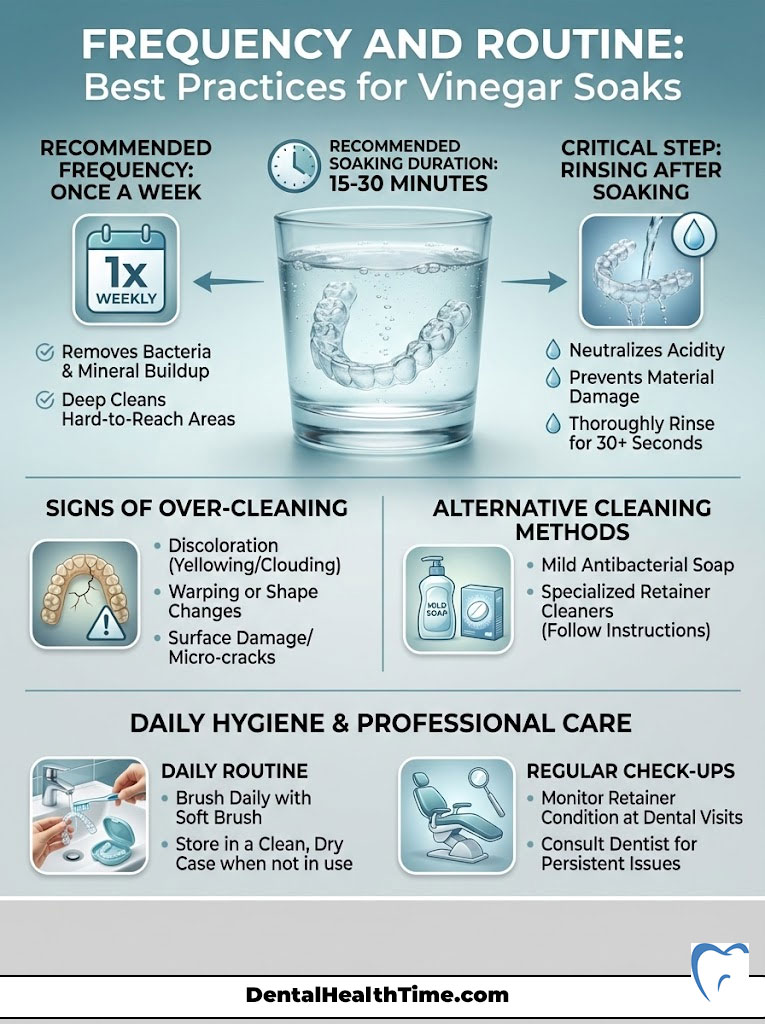
How often should you perform a vinegar soak for retainers? Is it possible to be too clean?
The Weekly Deep Clean
Dental professionals generally recommend the vinegar retainer cleaning method once a week. This frequency is sufficient to keep tartar from hardening without over-exposing the plastic to acid.
Think of it like a spa treatment for your appliance. Sunday night is a great time to establish this routine. Soak it while you shower or get ready for bed, scrub it, rinse it, and pop it in.
The Daily Maintenance
For daily cleaning, vinegar is overkill. You do not need a heavy-duty acid soak every morning.
Daily Routine:
- Remove the retainer immediately upon waking.
- Rinse it with warm water.
- Add a drop of mild, clear dish soap (Castile soap is great) to your soft toothbrush.
- Gently scrub the inside and outside.
- Rinse and store in a ventilated case.
Does vinegar damage my retainer if used often?
Yes. If you soak your retainer in vinegar every single day, the plastic may become brittle or develop a rough texture. This rough texture actually attracts more bacteria because it gives the bugs more surface area to cling to. Stick to the weekly schedule for the best results.
The Health Connection: Why This Matters
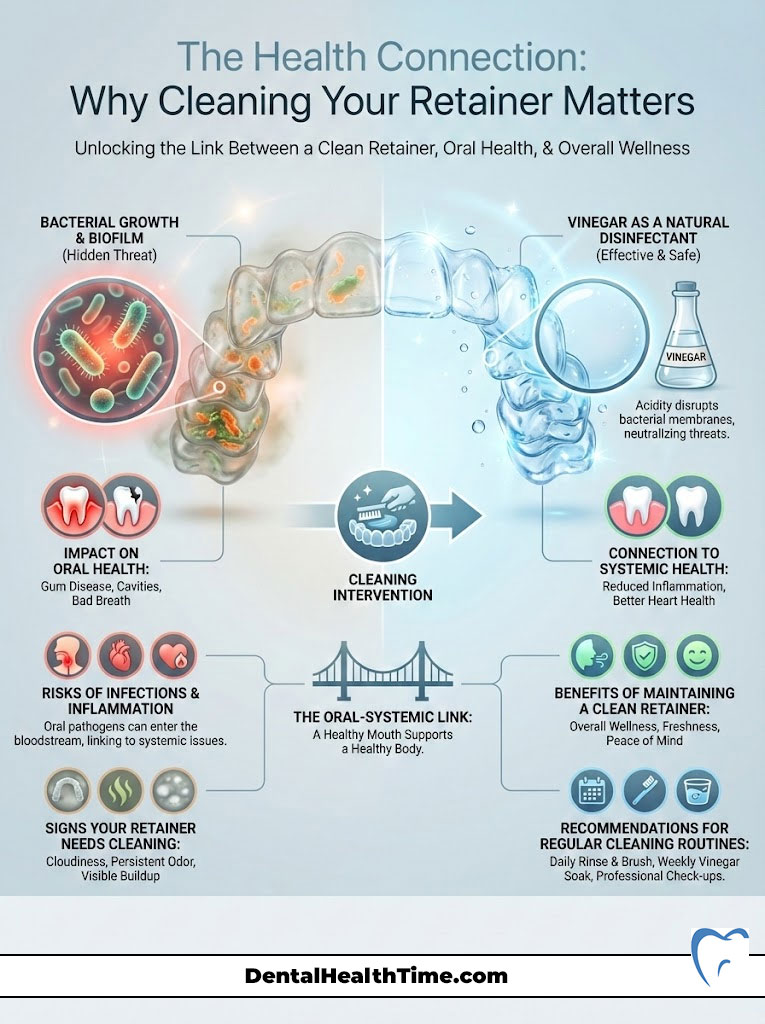
Why go through all this trouble to clean retainer with vinegar? It is not just about keeping the plastic looking new. It is about systemic health.
Preventing “Retainer Mouth”
Dirty retainers are a breeding ground for nasty pathogens. A study published in standard dental journals found that over 50% of retainers contain pathogenic bacteria, including Staphylococcus (Staph) and Candida.
When you put a dirty retainer back in your mouth, you are pressing these bacteria directly against your gums and teeth. This can lead to:
- Gingivitis: Inflammation of the gums caused by bacterial plaque.
- Halitosis: Chronic bad breath that no amount of brushing can cure because the source is the appliance itself.
- Illness: In rare cases, inhaling bacteria from oral appliances can contribute to respiratory infections or throat issues.
By using a safe retainer cleaning solution like vinegar regularly, you are essentially sanitizing the environment of your mouth. You are preventing the biofilm from maturing into a health hazard.
Common Mistakes to Avoid
To wrap up our guide on how to clean retainers naturally, let us summarize the absolute “No-Go” zones. Avoid these mistakes to ensure your retainer lasts as long as possible.
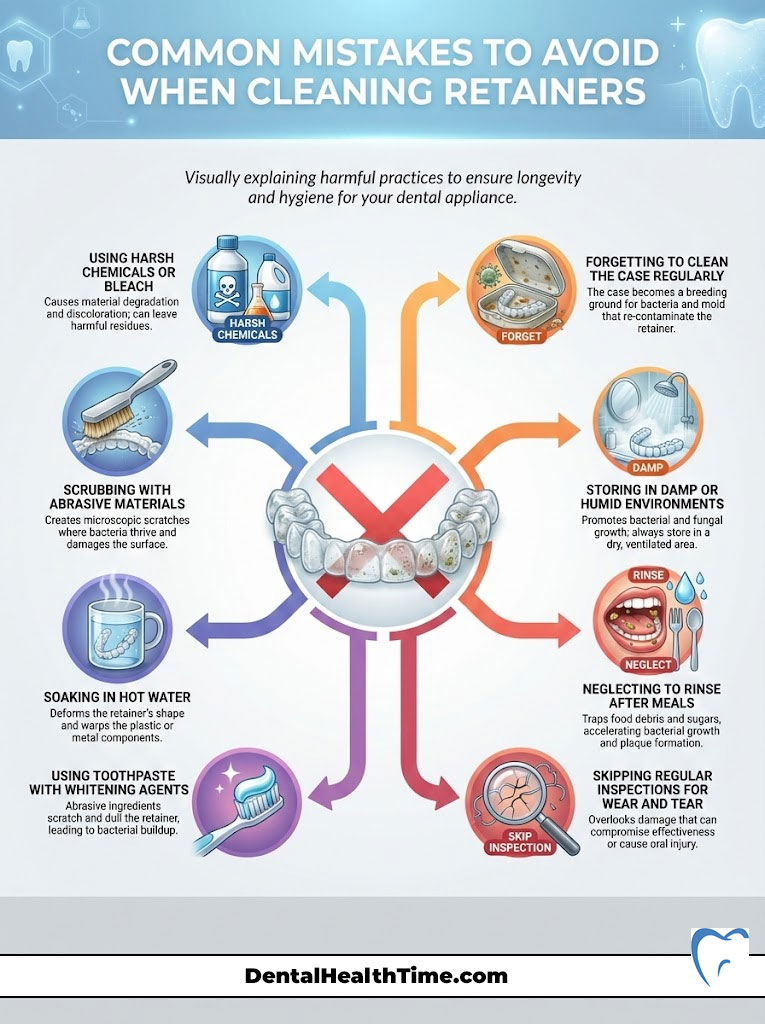
- Boiling Water: Never use hot or boiling water to mix your vinegar solution. Heat causes thermoplastic retainers to warp instantly. Once warped, a retainer cannot move teeth effectively and may even shift them out of alignment.
- Toothpaste: It seems intuitive to brush your retainer with toothpaste, but toothpaste contains abrasives (silica) meant for hard enamel, not soft plastic. These abrasives scratch the retainer, creating hiding spots for bacteria.
- Mixing Bleach and Vinegar: Never mix household cleaners. Bleach is toxic and should never be used on something you put in your mouth. Mixing bleach with vinegar creates chlorine gas, which is dangerous.
- Leaving the Retainer to Dry Out: While you want a ventilated case, leaving a retainer on a napkin in direct sunlight can dry out the acrylic, leading to warping or cracking.
Summary & Key Takeaways
Maintaining a clean orthodontic appliance does not require expensive tablets or harsh chemicals. You can clean retainer with vinegar effectively by following a few simple rules.
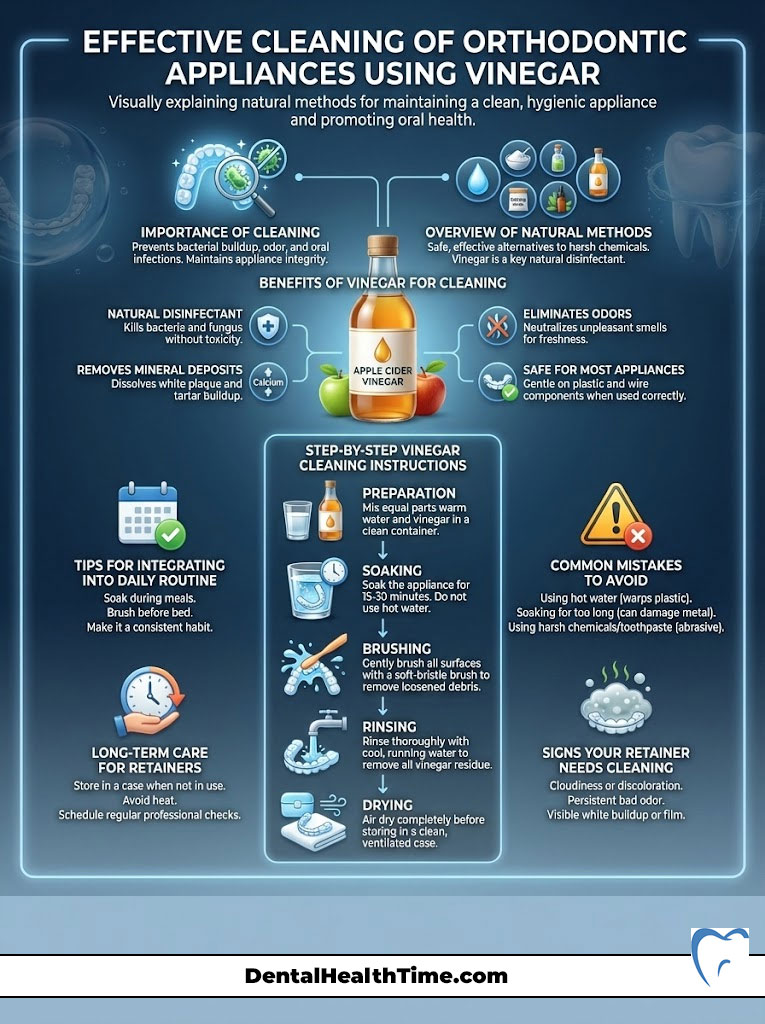
- The Golden Ratio: Always mix vinegar retainer cleaning solutions at a 1:1 ratio with lukewarm water.
- Time it Right: Soak for 15 to 30 minutes. Never overnight.
- Rinse Well: Thorough rinsing prevents acid residue and taste.
- Be Consistent: A weekly vinegar soak for retainers prevents the buildup of tartar that daily brushing cannot remove.
- Choose Wisely: Use distilled white vinegar for a safe retainer cleaning solution that will not stain your clear trays.
By integrating this natural method into your oral hygiene routine, you ensure your retainer stays clear, odor-free, and safe for years to come.
Frequently Asked Questions (FAQ)
Does vinegar kill bacteria on retainers?
Yes, the acetic acid in vinegar is a potent antimicrobial agent. It effectively reduces common oral bacteria and yeast (Candida), making it a reliable sanitizer for weekly maintenance.
How long should I soak my retainer in vinegar?
You should soak your retainer for 15 to 30 minutes. This timeframe is sufficient to dissolve tartar buildup without damaging the plastic material of the appliance.
Can I use apple cider vinegar to clean my retainer?
While you can, it is not recommended for clear retainers. Apple cider vinegar contains tannins that can stain clear plastic yellow over time. Distilled white vinegar is the better choice.
Will the vinegar taste stay on my retainer?
If you rinse thoroughly, the taste should disappear. If it lingers, dip the retainer in a mixture of water and baking soda for two minutes to neutralize the acid, then rinse again.
Is vinegar safe for Invisalign trays?
Yes, vinegar is safe for Invisalign and other clear aligners if diluted 1:1 with water and soaked for no longer than 30 minutes. Extended soaking can cloud the plastic.
Can I soak my retainer in vinegar overnight?
No. Soaking overnight exposes the plastic to acid for too long, which can soften the material and alter the fit of the retainer.
How do I remove hard calcium buildup from my retainer?
Vinegar is the best natural remedy for this. The acid dissolves the calcium. If the buildup is thick, soak for 30 minutes and then scrub vigorously with a soft toothbrush.
Can I mix vinegar and baking soda to clean my retainer?
Mixing them creates a fizzing reaction that looks impressive but neutralizes the cleaning power of both. It is better to use them sequentially: soak in vinegar first to dissolve buildup, then scrub with baking soda to deodorize.
What is the ratio of vinegar to water for cleaning retainers?
The ideal safety ratio is 1 part distilled white vinegar to 1 part lukewarm water.
Why did vinegar turn my retainer white or cloudy?
Cloudiness after a vinegar soak usually means the plastic was either soaked too long (acid etching) or the tartar has turned white as it dissolves but hasn’t been scrubbed off yet. Scrub gently to see if it removes the residue.
Can I use cleaning vinegar instead of white vinegar?
No. “Cleaning vinegar” is often 6% to 30% acidity and may contain impurities not safe for oral appliances. Always use food-grade distilled white vinegar (5% acidity).
Is hydrogen peroxide better than vinegar for retainers?
Peroxide is better for whitening and killing germs, but vinegar is far superior for removing hard water deposits and tartar. They serve different purposes, but vinegar is generally safer for the plastic’s longevity.
Disclaimer
The information provided in this article is for educational purposes only and does not constitute medical or dental advice. Always consult your orthodontist or dentist regarding specific care instructions for your unique dental appliance. Manufacturers’ guidelines for specific retainer brands (such as Vivera or Invisalign) should always take precedence over general home remedies.
References
- American Association of Orthodontists (AAO). “Orthodontic Appliance Maintenance and Care.”
- Journal of Applied Oral Science. “Antimicrobial efficacy of vinegar against oral pathogens.”
- Mayo Clinic. “Oral Health: Brush up on dental care basics.”
- Academy of General Dentistry. “Know Your Retainers: Types and Care.”