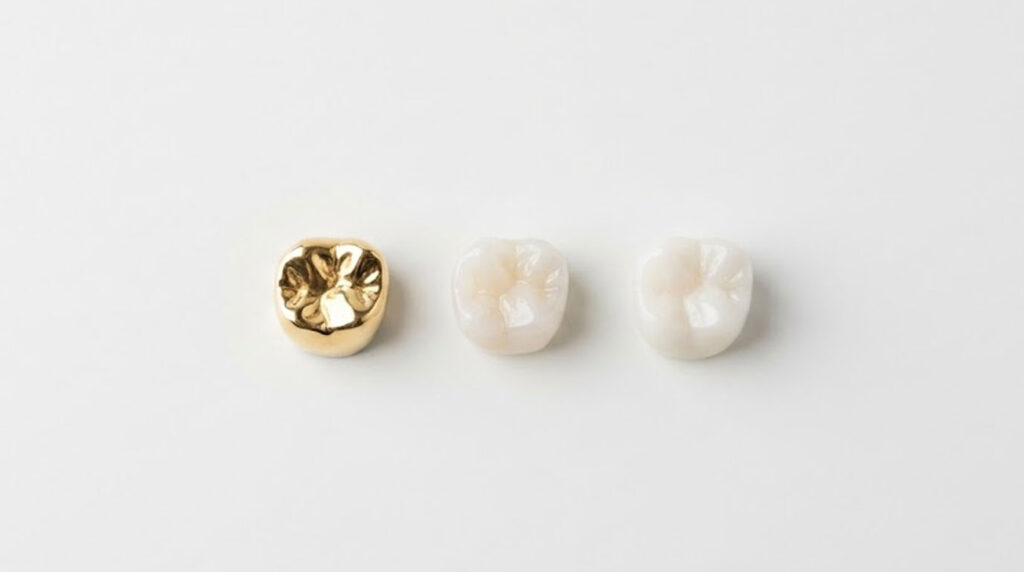

I stared at the four-figure estimate on the clipboard, my tongue nervously prodding the jagged edge of my molar. The throbbing pain wasn’t just in my jaw; it was rapidly spreading to my wallet. I realized I had zero leverage because I didn’t understand what I was buying.
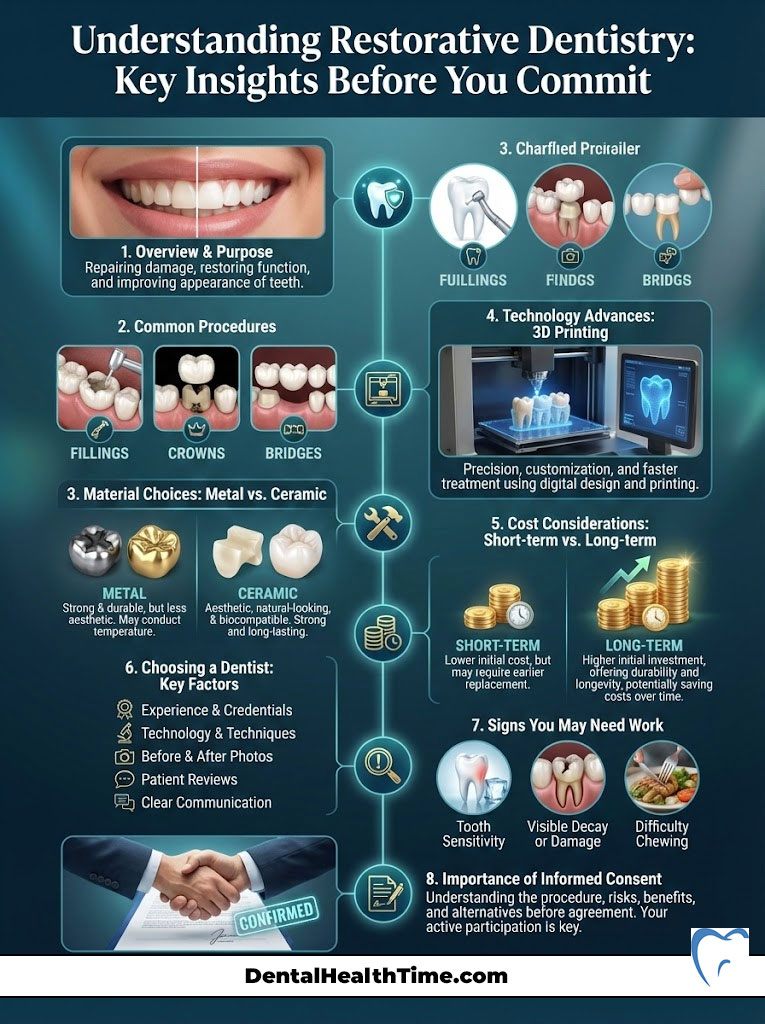
Most of us treat dental work as a necessary nightmare, blindly signing forms to make the ache stop. But after diving deep into the world of restorative dentistry, I found that not all “caps” are created equal. From space-age materials to 3D-printed solutions, the technology has shifted dramatically.
Before you commit to a permanent change in your mouth, you need to know what I discovered. There is a massive difference between a quick fix and a long-term investment in your health.
The Hidden Architecture of Your Smile
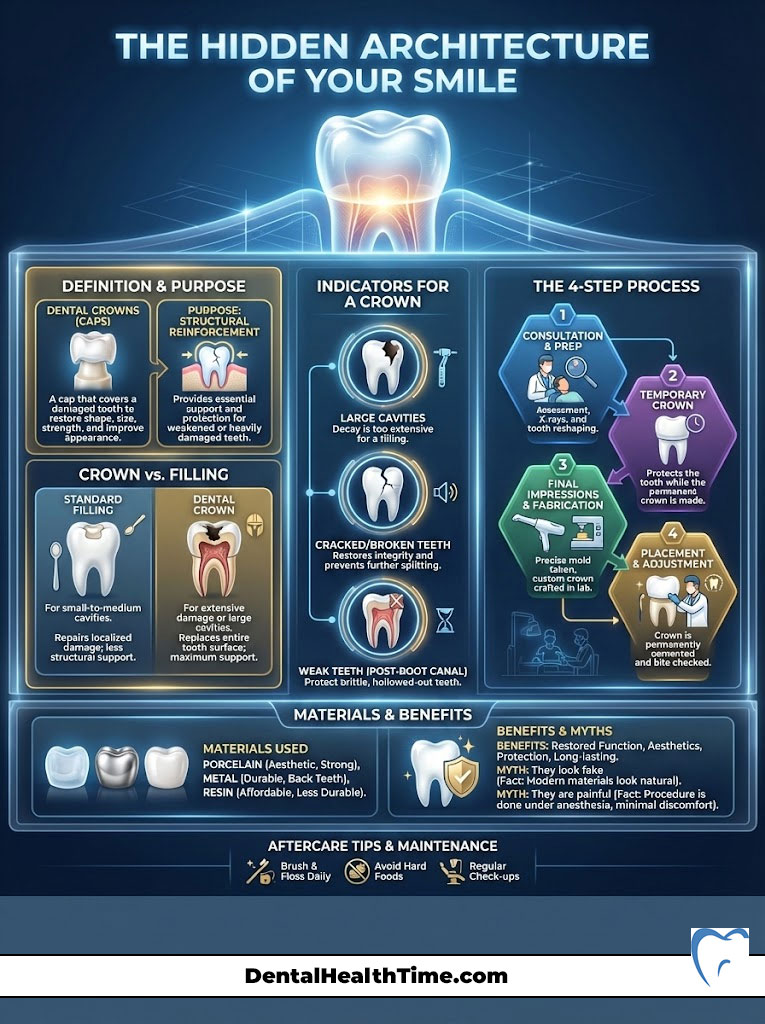
When my dentist first mentioned a “crown,” I pictured a simple cover, like a lid on a jar. The reality is far more complex and fascinating. This isn’t just patching a hole; it’s a complete structural rebuild of a compromised tooth.
When Fillings Fail
I learned that crowns are the essential backup plan when a tooth is too damaged for a standard filling. You might need one if:
- A massive cavity has devoured more than half the tooth width.
- You recently underwent a root canal procedure.
- Trauma or grinding has caused deep stress fractures.
Choosing Your Armor: Material Matters
Here is where I was truly shocked. The material you choose dictates not just the look, but the longevity of the restoration. My research revealed that the “white tooth” option isn’t a single category.
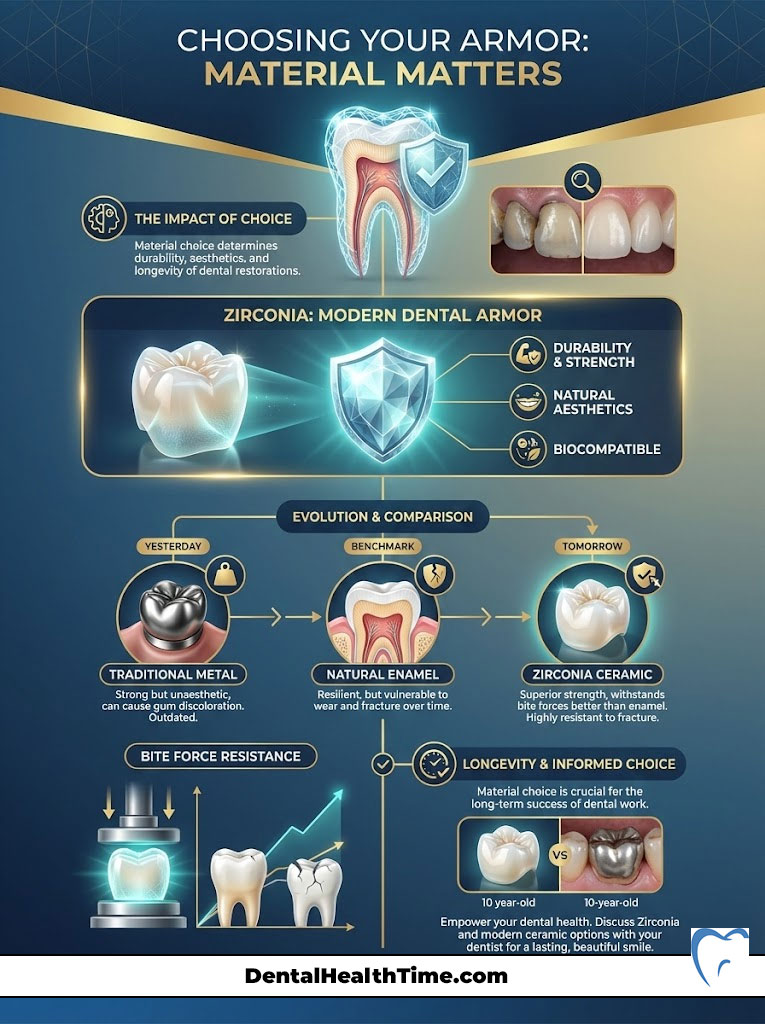
The Zirconia Revolution
I discovered that Zirconia is the heavyweight champion of modern dentistry. This material is a ceramic steel, offering amazing durability without the dark metal lines of older crowns. It handles bite forces that would shatter natural enamel.
Old School vs. New Tech
- Gold Alloy: The “gold standard” for back teeth. It never breaks, but the aesthetic is… distinct.
- Porcelain-Fused-to-Metal (PFM): Strong but prone to chipping. I noticed these often look opaque or fake.
- Lithium Disilicate (E-max): Stunningly realistic. I found these are best for front teeth where looks matter most.
The Procedure: A Tale of Two Timelines
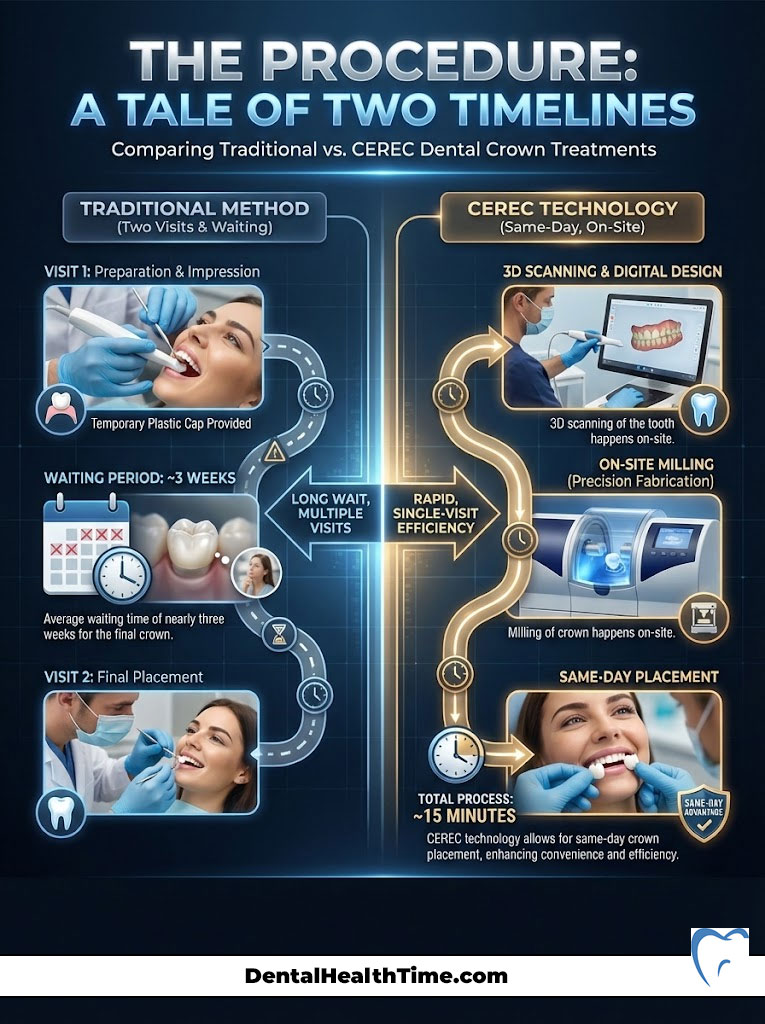
My experience taught me that you have two distinct paths for receiving this treatment. The technology your practitioner uses determines if you wait weeks or walk out finished in hours.
The Traditional Two-Visit Grind
Most offices still use this method. You get a temporary plastic cap—which I found annoying and rough—while a lab crafts the permanent version. You live in limbo for nearly three weeks.
The Same-Day Miracle (CEREC)
This felt like science fiction. Using CAD/CAM technology, some dentists 3D scan your mouth and mill the crown right there. I watched a machine carve a tooth from a ceramic block in 15 minutes.
The Financial Reality Check
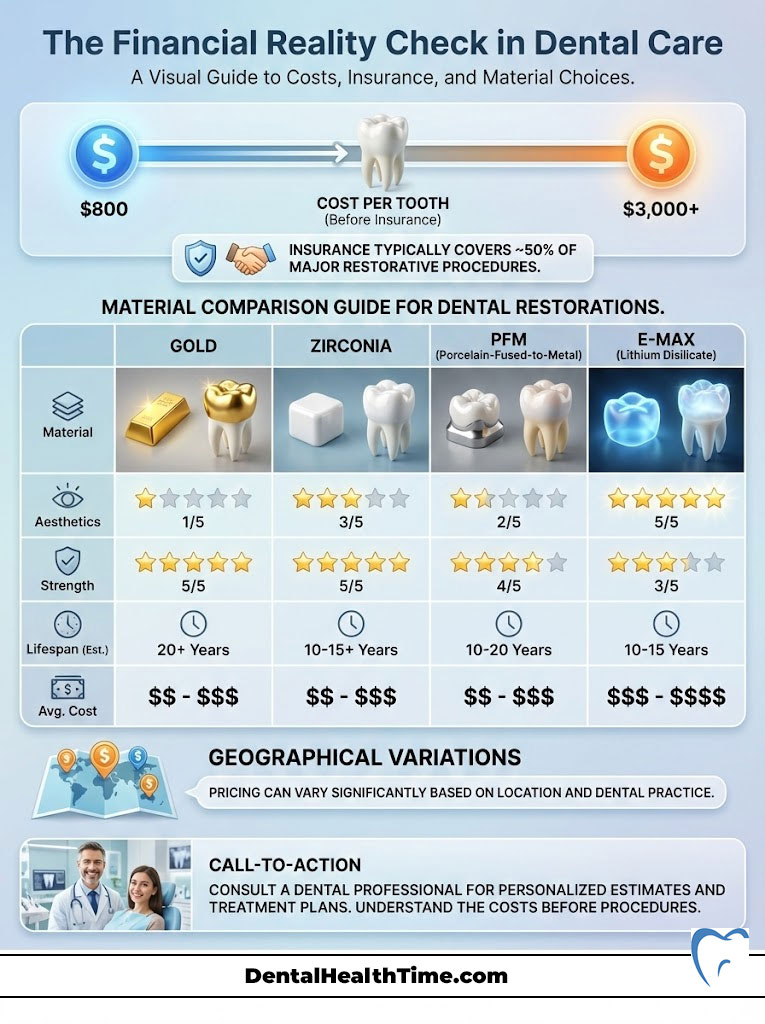
Let’s talk numbers, because this is where the panic sets in. I found that pricing varies wildly based on geography and material choice.
What You Will Actually Pay
Expect the invoice to sit between $800 and $3,000 per tooth before insurance kicks in. If you have coverage, plans typically categorize this as “major restorative,” covering roughly half the bill.
Material Comparison Guide
| Material | Est. Lifespan | Aesthetic | Strength | Avg. Cost |
|---|---|---|---|---|
| Gold | 20+ Years | Poor | Superior | $1,200+ |
| Zirconia | 15-20 Years | Good | Excellent | $1,300+ |
| PFM | 10-15 Years | Fair | High | $1,000+ |
| E-max | 10-15 Years | Superior | Moderate | $1,500+ |
My Final Takeaway
Don’t just nod and say yes. Ask about the materials. Ask if they use a lab or do it in-house.
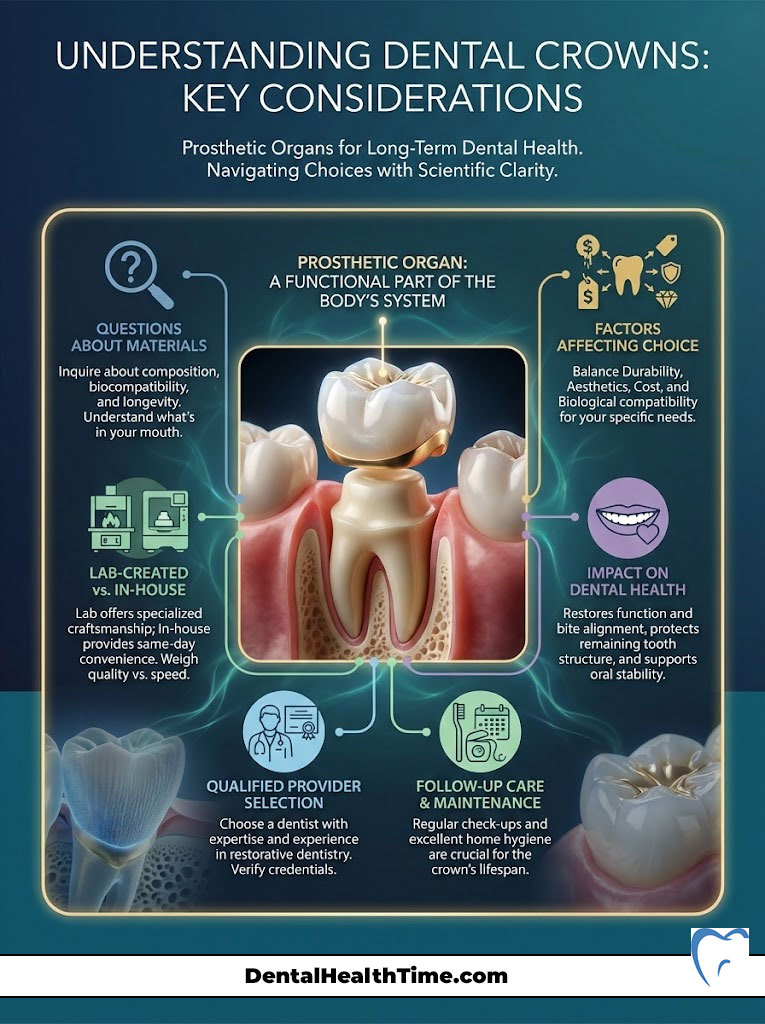
I realized that a dental crown is a prosthetic organ that lives in your body 24/7. Choosing the right one turns a medical expense into a decades-long solution.